It may be a cliché, but it’s true: when it comes to EV charging, one size does not fit all. For commercial EV fleets, deploying the most appropriate charging system for their duty cycles can not only save money, it may enable them to deploy more EVs, and/or to sidestep utility upgrade bottlenecks.
Medium- and heavy-duty EVs need higher power levels than passenger cars, but they don’t necessarily need the fastest charging hardware available. For example, if you have a fleet of trucks that you know are going to be sitting in the depot overnight, every night, you do not need to charge them in two hours.
Today, DC charging is often considered the only viable option for charging trucks or buses, because most AC charging in North America (J1772 and J3400/NACS) operates at roughly 10-15 kW or less. However, DC charging stations cost considerably more than Level 2 AC stations, and, depending on a site’s existing electrical service, may also require transformers, which cost money, take up space, and may require long waits for installation.
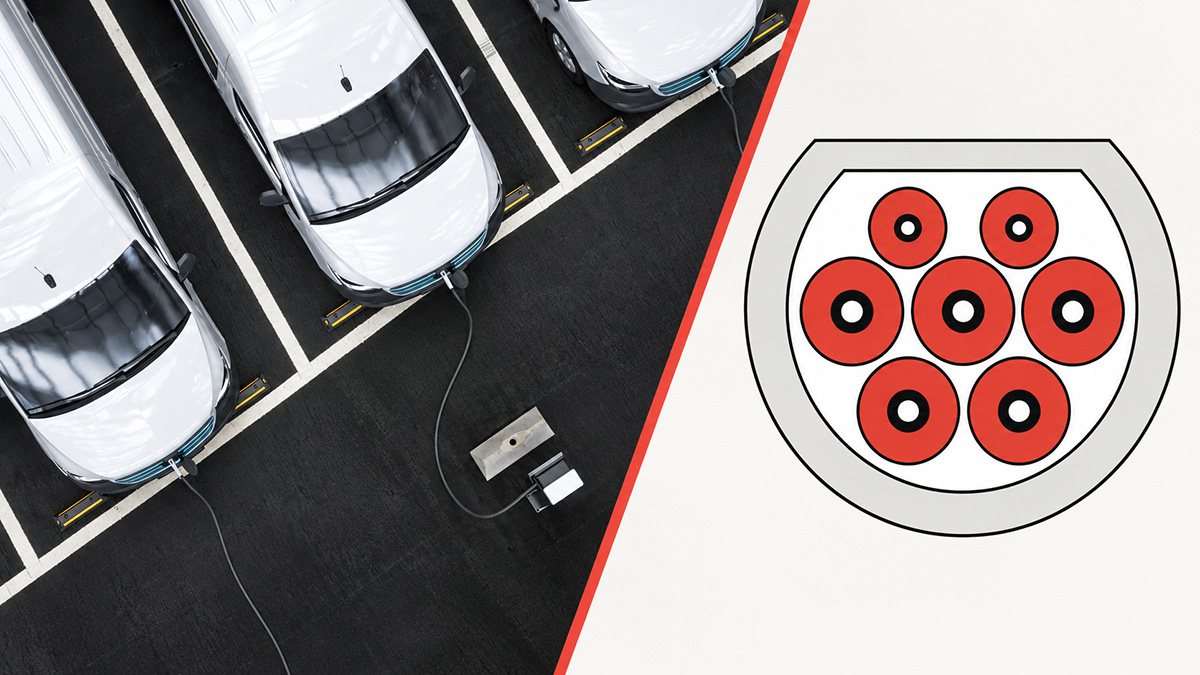
Many infrastructure planners may not realize that there is another option, which can enable fleets to get into the sweet spot for charging power. The J3068 standard enables three-phase AC charging across a broad power range. A common 480-volt, 63-amp implementation delivers about 52 kW, while higher-power configurations are possible. Using LIN-CP communication and active cooling, the specification’s limit of 160 A would enable 480 V AC charging at 131 kW, potentially at much lower infrastructure cost than DC charging.
Source link