Hyderabad , November 26, 2026: Waking up to a full battery every morning is the single biggest advantage of owning an electric vehicle. In India, home charging costs roughly ₹1 to ₹2 per kilometre on domestic tariffs—compared to ₹3–₹4 per km at public DC fast chargers and ₹6.80+ per km for a petrol car. Over a five-year ownership cycle, shifting to home charging comfortably saves over ₹2 lakh compared to an equivalent petrol vehicle.
Yet for most prospective EV buyers in Mumbai, Delhi, Bengaluru, Chennai, and Hyderabad, the real friction isn’t the car—it’s navigating apartment Resident Welfare Associations (RWAs), estimating turnkey installation costs, and upgrading sanctioned electricity loads with local DISCOMs.
Here is the complete 2026 breakdown of home EV charger installation costs, city-by-city load upgrade workflows, and how fast EV adoption is accelerating across India’s five largest metro markets.
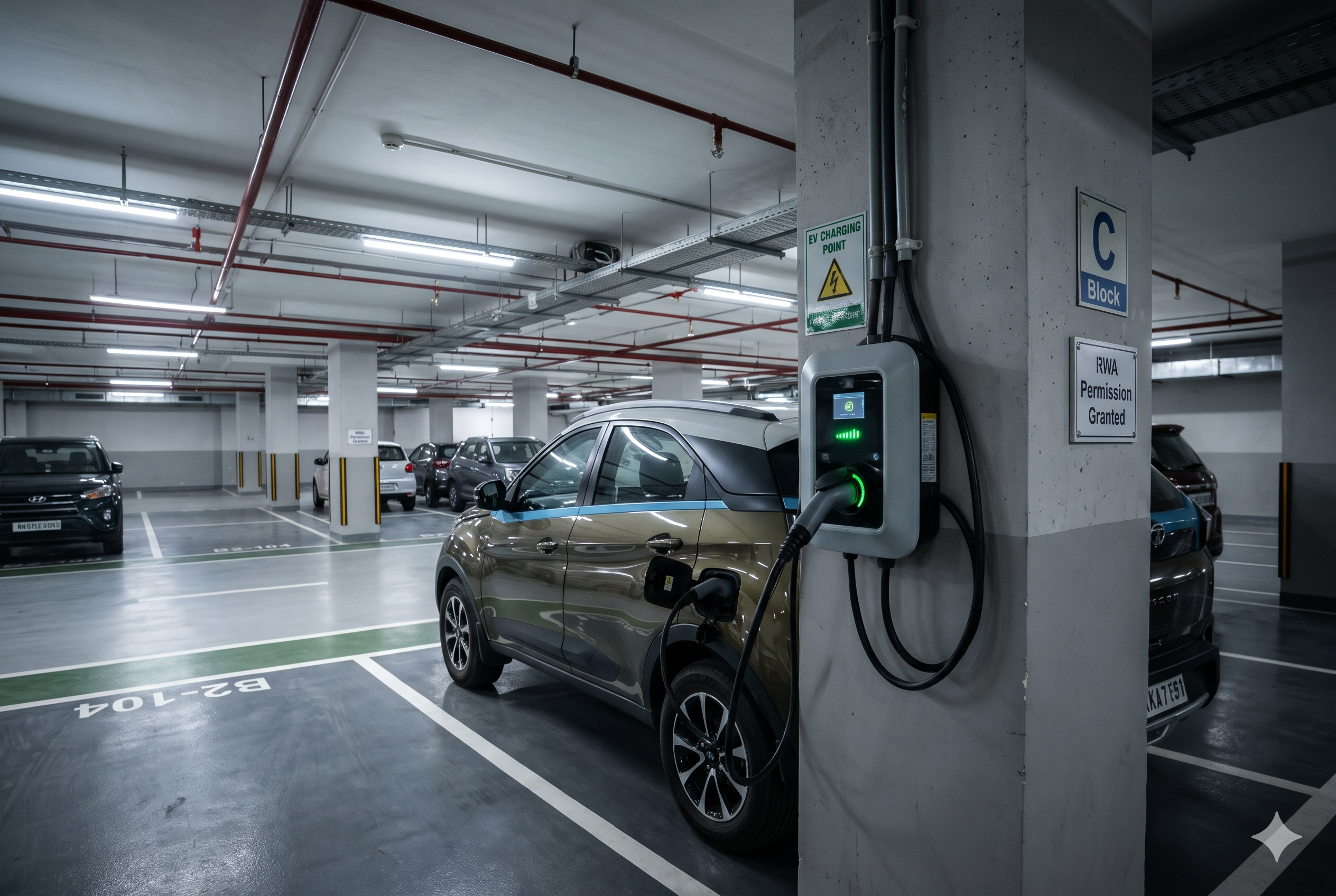
What you pay depends on whether you stick to the portable charger supplied with your vehicle or install a dedicated 3.3 kW / 7.4 kW AC wallbox.
Under the Ministry of Power’s EV Charging Infrastructure Guidelines (2024), residents have the right to install private EV charging points in their allotted apartment parking spaces. RWAs cannot arbitrarily refuse a compliant installation if the resident bears the cost, uses a licensed electrician, and submits the required safety documentation. Furthermore, new apartment buildings with 20+ units approved after 2022 in states like Delhi, Maharashtra, and Karnataka are mandated to keep 20% of parking bays EV-ready.
3 kW charger can often run on a standard 5 kW domestic connection if heavy appliances aren’t running simultaneously.
Source link