The Centre of Excellence in Advanced Automotive Research (CAAR), is also working on what it calls a ‘vehicle passport.’ The idea is similar to the battery passport that Europe has made mandatory. It would track key parts, including rubber belts, for instance, from where the raw material comes from to the end of the part’s life.
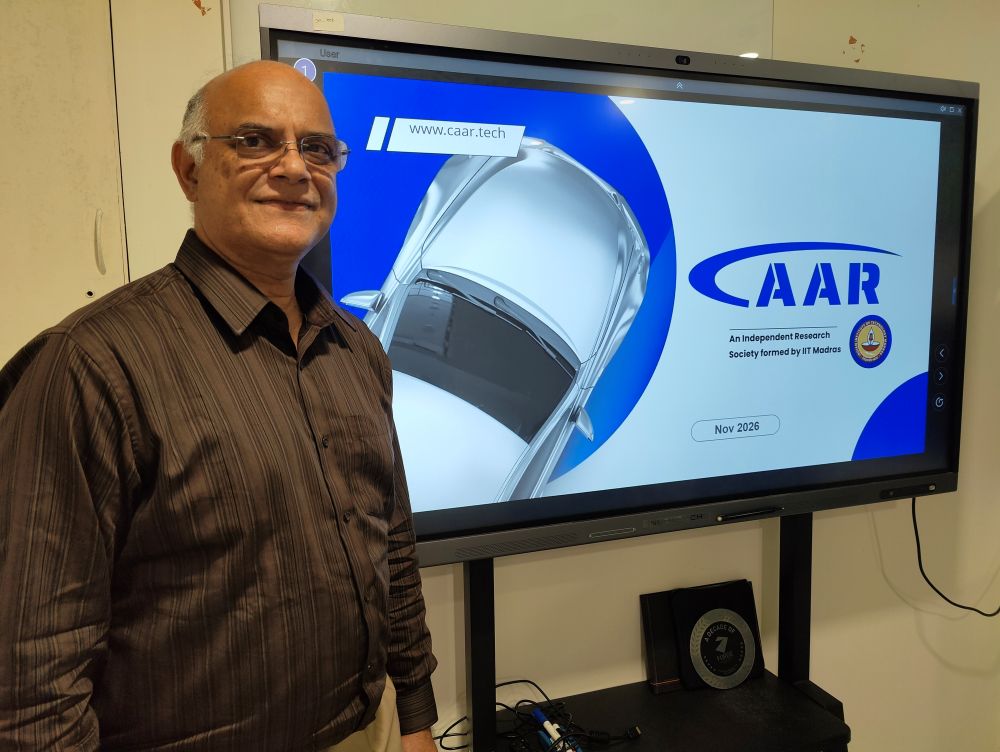
Speaking to this publication, Dr. Anand Lakshmanan, , Senior Project Advisor – Software Defined Vehicles & Advanced Automotive Technologies, CAAR, said, the vehicle passport will also help curb fake parts from reaching customers. But it works only if the whole supply chain takes part, not just the carmaker, he said.
Some buyers knowingly choose cheaper grey-market parts. Today, the risk from such parts is mostly mechanical. In the future, it could also be a cyber risk. He compared the fix to a printer that warns you when a non-original cartridge is put in. Vehicles need the same kind of check, he reiterated.
CAAR is bringing India’s carmakers and parts suppliers together to build a shared software base for the next generation of vehicles. A couple of weeks ago, it held a workshop at IIT Madras that drew more than 30 companies, including vehicle makers and their Tier 1 and Tier 2 suppliers. The aim is to form a group of companies that can jointly develop common platforms for software-defined vehicles (SDVs).
Dr. Lakshmanan, said the automotive industry cannot afford to wait. India is now the world’s third-largest vehicle market, but staying there and moving up will need more than making and selling vehicles.
Source link