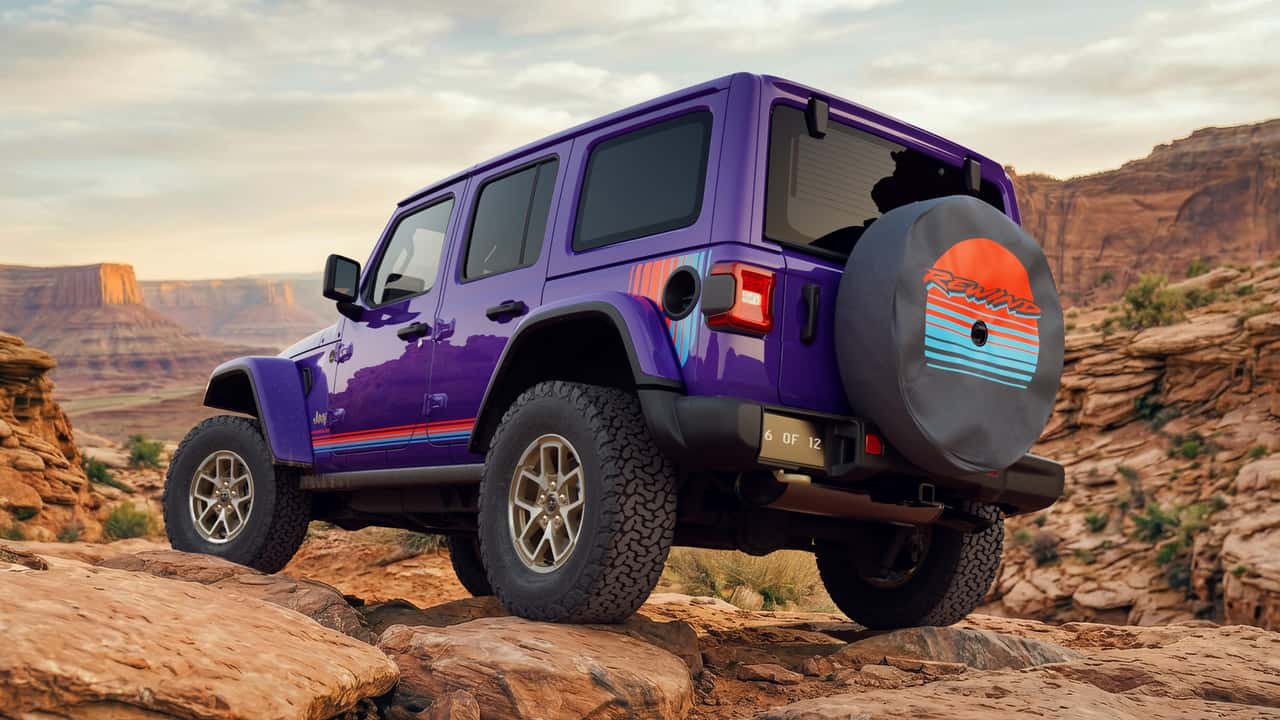
A spinning front tire six inches off the ground can strand a truck that is otherwise perfectly capable. The engine still makes power, and the transmission still sends it somewhere. But an open differential sends all of it to the wheel with the least resistance, which in this case is the one doing nothing useful at all.
That's the exact moment a locking differential earns its keep. Lock the axle, and both wheels turn at the same speed no matter what each one is touching. That's why Jeep, Ford, and Toyota all still bolt them to their serious off-road trims.
A locking differential forces both wheels on an axle to spin at the same rate, regardless of how much grip each one has. Eaton, a major maker of aftermarket lockers, explains that this setup can deliver full traction to both wheels even when one is off the ground entirely.
An open differential does the opposite. It sends power to whichever wheel spins easiest, which is great for turning smoothly on pavement but disastrous the moment one tire loses contact with the ground.
According to the Arizona OHV program's off-road information brochure, a locker physically joins the two axle shafts so they turn as one unit. That's what keeps a truck crawling forward instead of just burning rubber on the one wheel in the air.
Mechanic and off-road instructor Ronny Dahl breaks this exact scenario down in a video on how and when to use diff lockers , showing how a locked axle turns a stuck rig into one that just keeps climbing.
Source link