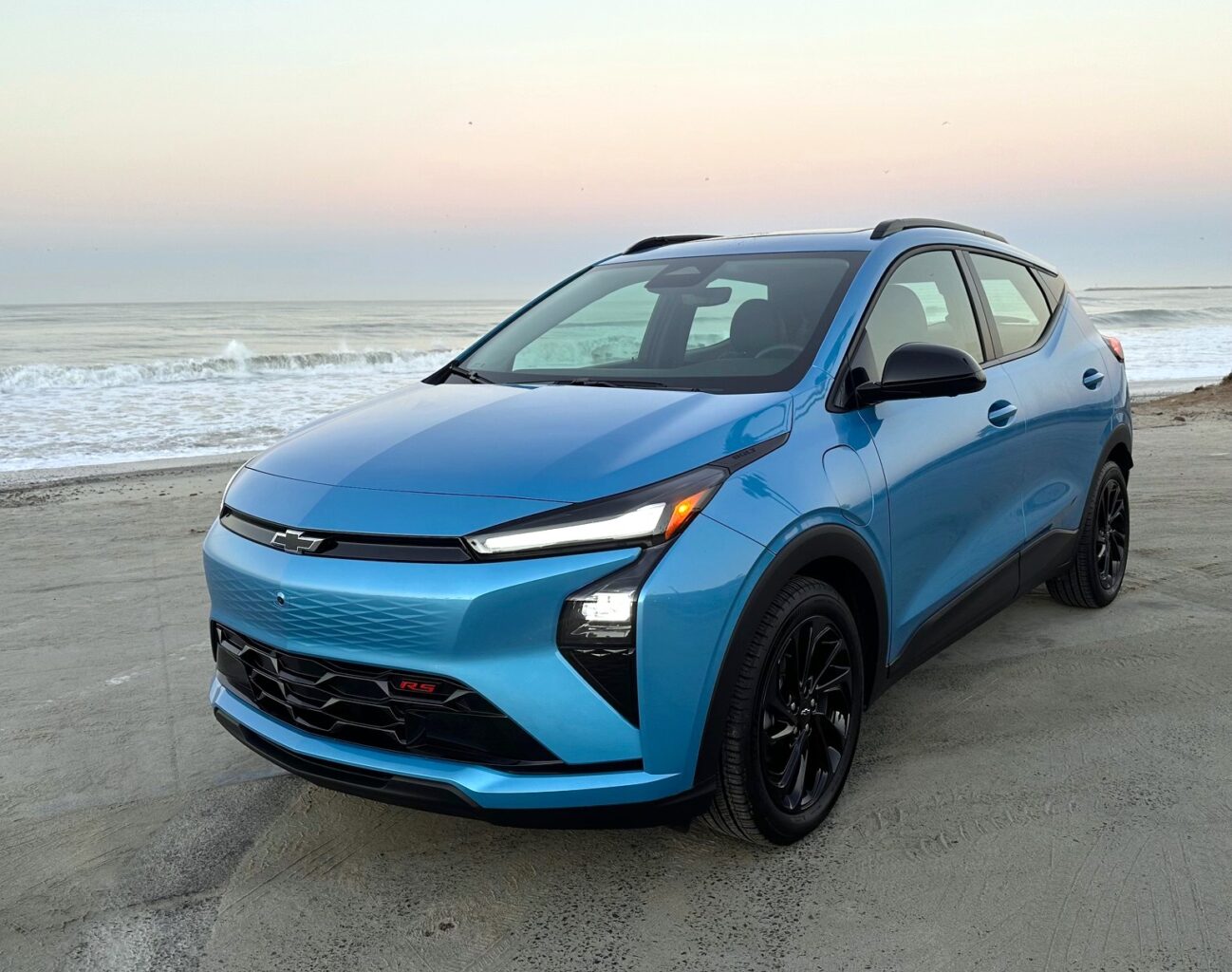
Politics are ending production of the 2027 Chevrolet Bolt. A combination of the federal $7,500 tax credit being eliminated, relaxed fuel and pollution regulations and tariffs are forcing auto manufacturers to onshore their production and allowing them to shift to more profitable combustion models. Consumers are the losers.
The Chevrolet Bolt is a very fine all-electric automobile that even without the tax credit is the lowest priced EV on the market at $27,600. Chevrolet is not abandoning the EV market as it offers larger and more profitable all-electric SUVs—the Blazer EV , Equinox EV and the Silverado EV.
The 2027 Bolt has a 65 kWh lithium-iron phosphate (LFP) battery powering a single 150 kW motor, producing 210 horsepower and 169 pound-feet of torque through a one-speed automatic transmission driving the front wheels. The EPA estimates the all-electric driving range at 262 miles. Clean Fleet Report drove the Bolt 201 miles through Southern California on a mix of freeway and city streets and got 4.0 miles per kWh, which is very efficient.
We didn’t need to charge, but topped off the battery anyway using the Level 2, 240-volt ChargePoint Home Flex charger mounted in our garage. The 11.5 kWh onboard charger delivered about 40 miles of range per hour. Had we opted for a public DC Fast Charger, the charging would have been 10-80% in 25 minutes.
Chevrolet also makes charging more convenient with a new Dual Level Charge Cord , which could eliminate the need to purchase a separate home charger.
Source link