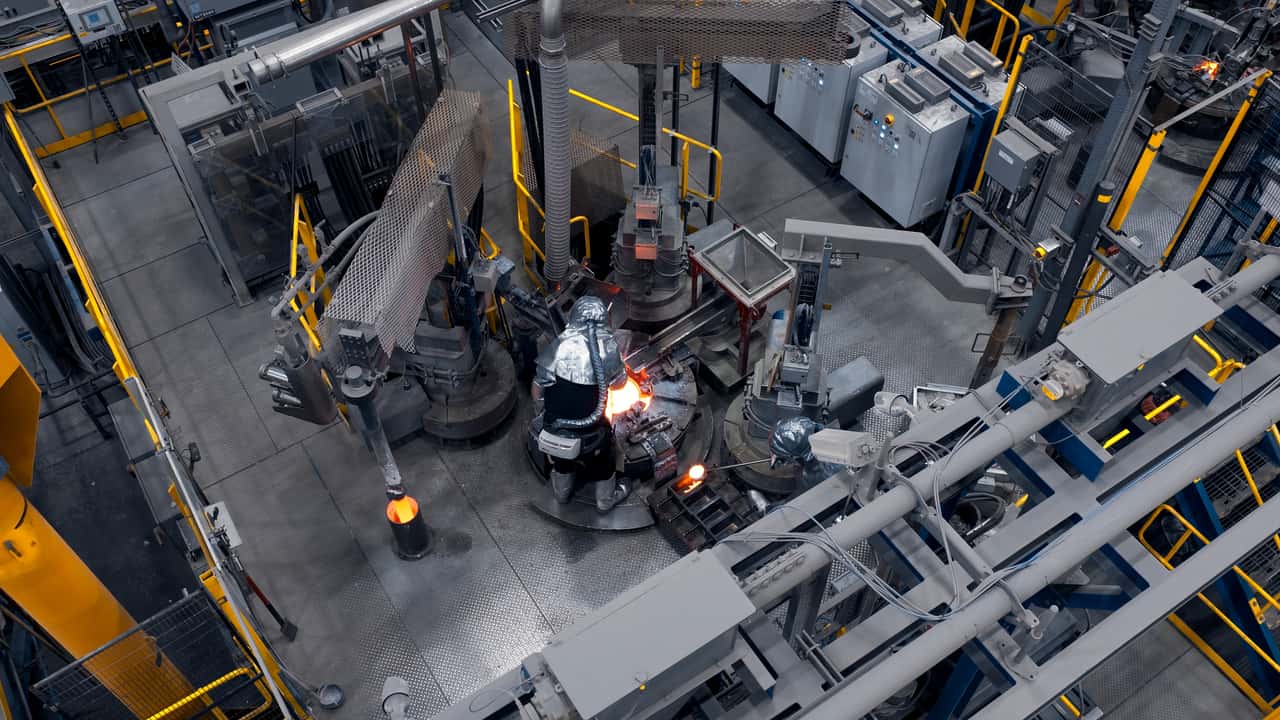
Inside MP Materials' "Independence" factory in Fort Worth, Texas, items that look like gum strips, corn flakes, and crushed pepper are laid out on a table. A giant U.S. flag hangs from the ceiling, and employees wearing protective thermal suits work near equipment where temperatures surpass 1,000 degrees Celsius. Under bright white lights, a shiny red Cadillac Vistiq gleams with its electric motor ripped open on a table, revealing what's inside: rare earth magnets.
The magnets are tiny, roughly equivalent to a miniature Hershey's candy. They feel robust and solid to hold, with smooth texture and sharp edges. Above all, their importance is hard to overstate. They're used in everything from military weapons and fighter jets to medical devices, iPhones, and electric vehicles.
There’s just one big elephant in the room: China dominates the production of rare earth magnets. The country has the largest known rare earth reserves in the world, accounting for 49% of global supply, according to the International Energy Agency. Virtually all the rare earths used in the U.S. currently are sourced from overseas, giving Beijing incredibly strong leverage against its trading partners.
S. companies that depend on them scrambling to secure supply. Ford even suspended production of the Explorer SUV for a week because a supplier ran out of magnets. S. eventually caved to Chinese pressure by trimming the tariff percentages, although China’s reduced export controls are still in effect .
Source link