Auto localisation moves up the technology stack, from chips to smart factories
India’s automotive localisation push is moving beyond vehicle assembly and conventional components into semiconductors, software, advanced packaging, industrial automation and energy-efficient factory systems.
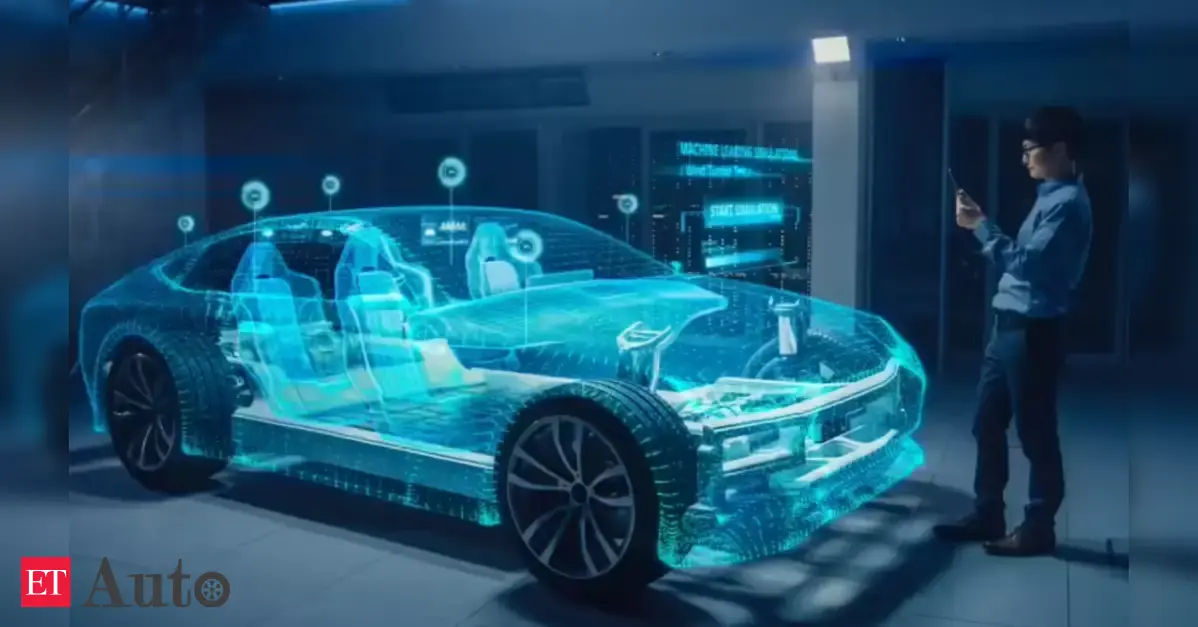
Cadence provides simulation, implementation, emulation and software-hardware co-verification capabilities, allowing automotive customers to test chips and systems before silicon, including running traffic and testing hardware and software together.
The shift is driven by electrification, software-defined vehicles (SDVs), shorter product development cycles and the need for automakers to improve factory efficiency, reliability and energy consumption. For semiconductor and technology suppliers, this is opening opportunities across the automotive value chain, from chip design and packaging to energy management, digital twins and connected industrial equipment. Advt
“The semiconductor industry is a long game, and putting a timeline on it is challenging at the moment. “Eventually, I hope, we aspire to be a part of that journey to see completely localised chips,” Malini Narayanamoorthi, President, Renesas India, told ETAuto during Semicon India 2026. Chips: The next localisation frontier India is building semiconductor capabilities as the government pushes manufacturing and packaging. But automotive chip localisation remains complex because of stringent qualification, safety, reliability and scale requirements. “It's like a 1,000-piece puzzle and you're fitting in each piece,” Narayanamoorthi said.
She sees automotive semiconductor localisation as a long-term process, even as vehicle architectures rapidly become more electronic. “With the advent of more electronic architecture, many mechanical functions are now being replaced by either electronic or electromechanical operations. I think it's only increasing,” she added.
Source link