
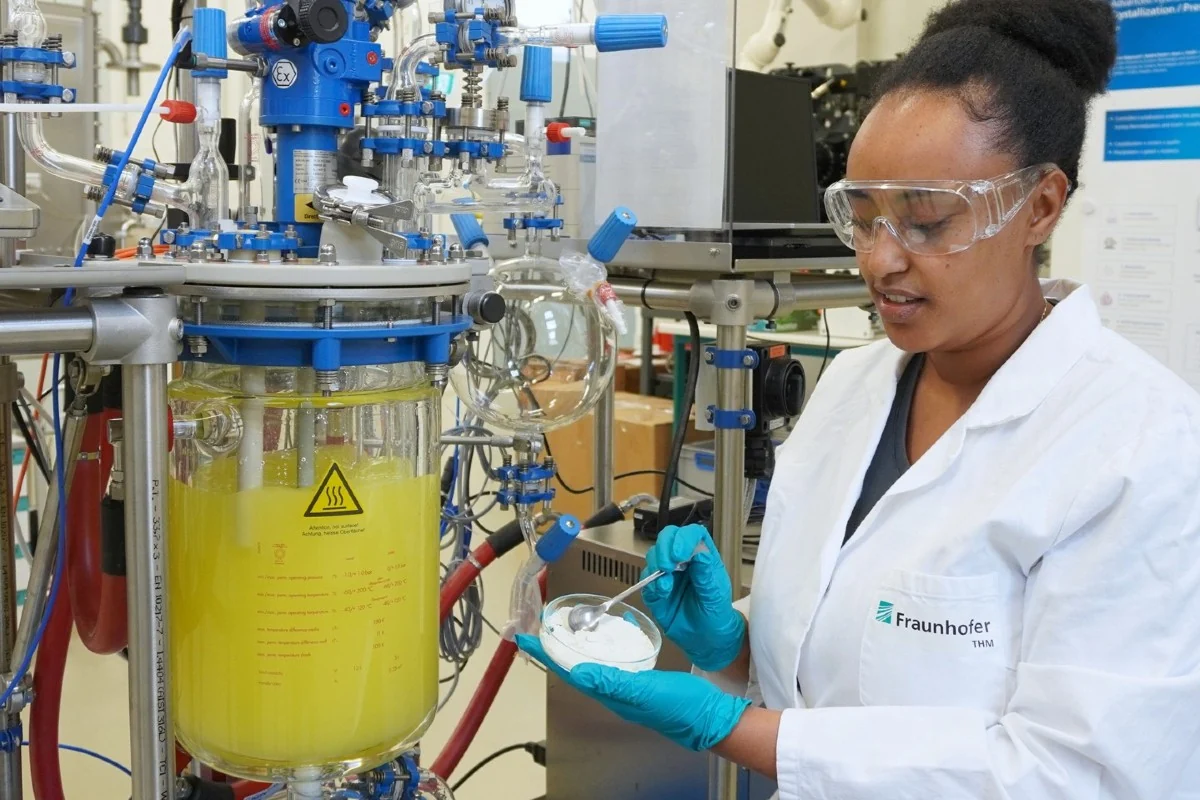
Technology that enables the recovery of rare earth elements such as neodymium from magnets is being developed in the NEO-CYCLE project in Germany with researchers from the Fraunhofer IKTS and TU Bergakademie Freiberg. Such magnets are used, among other things, in electric vehicles and wind turbines, and through these new technologies, can be upcycled in Europe for other industries, including pharmaceuticals and the hydrogen economy.
As has often made global headlines in recent years, rare earth elements are essential for manufacturing, but are often imported through complex processes, creating awkward geopolitical dependencies. One such example is the rare earth metal neodymium, 90 per cent of which is processed in China. Researchers at the Fraunhofer Institute for Ceramic Technologies and Systems (IKTS), in collaboration with their project partner TU Bergakademie Freiberg and other stakeholders, are improving recycling methods to recover rare earth elements from old magnets.
The researchers are focusing on neodymium magnets, which the Fraunhofer team counts among the strongest permanent magnets in the world. The institute notes that the combination of neodymium, iron and boron is used in electric vehicles, as well as in wind turbines and electronic products such as speakers, smartphones and hard drives. Global demand for permanent magnets is rising, with estimates suggesting an annual growth rate of up to 8.3 per cent. As the research partners point out, it is very important to recycle hard-to-source rare earth elements like neodymium domestically, but this also involves very complex processes.
Reusing neodymium for new magnets requires a very high level of purity.
Source link