How CAFE III norms could give ICE engines a longer runway through REEVs
With REEVs receiving the same three-times compliance weighting as BEVs under CAFE III, automakers could use the technology to meet fuel-efficiency targets without shifting entirely to pure electric vehicles, according to experts.
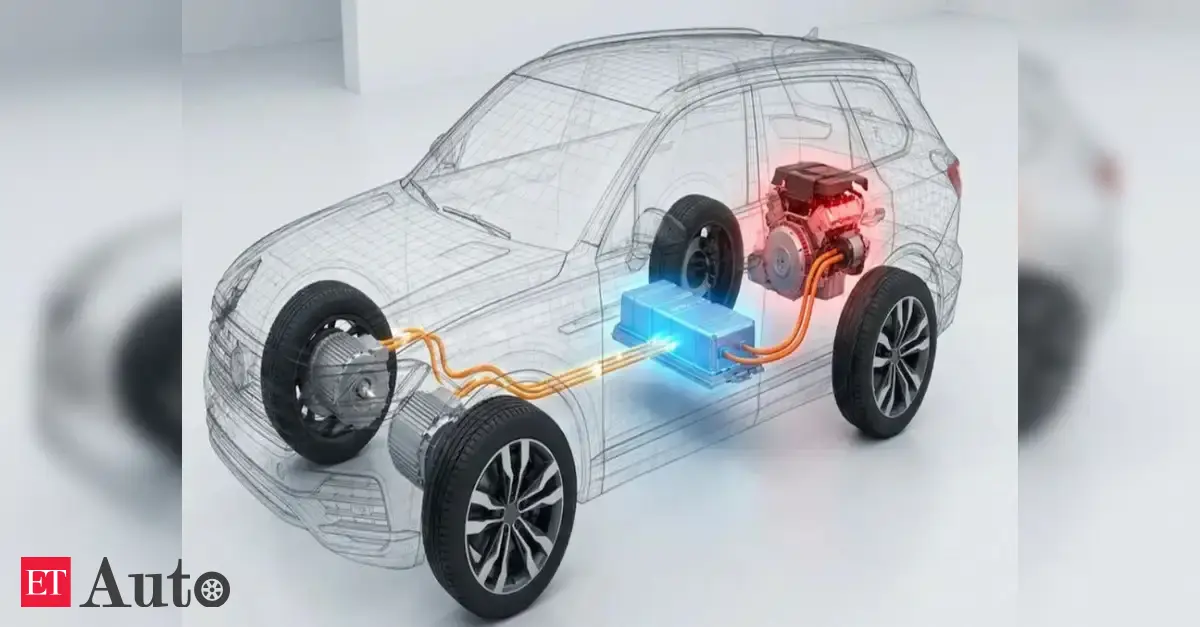
REEVs use an electric motor to drive the wheels, with a combustion engine generating electricity to extend range.
The recently notified Corporate Average Fuel Economy (CAFE) III norms, which will be implemented in India from April 1, 2027 for five years, could give range-extended electric vehicles (REEVs) a stronger case in India. Under the new norms, REEVs are counted as three cars, the same as battery EV and let carmakers trade credits. This allows automakers to pursue compliance targets without moving entirely to battery-powered vehicles. According to experts, that could make REEVs a bridge between petrol cars and pure electrics. Advt
“Pure BEV may be the future but range extenders or hybrids will give extension to ICE technology. Without them, the transition away from ICE could have happened much sooner,” Puneet Gupta, Director, Mobility, at S&P Global Mobility told ETAuto . REEVs’ appeal
A REEV’s combustion engine is not directly connected to the transmission. Instead, it operates as a generator, supplying electricity to the battery, which powers the motor that drives the vehicle. “Directly your engine will not be connected to the transmission,” Gupta said, explaining the series-hybrid arrangement. Ashim Sharma, Senior Partner and Group Head at NRI Consulting & Solutions, said the configuration allows the engine to operate closer to its most efficient range rather than constantly adjusting to changes in acceleration, deceleration and power demand.
Source link