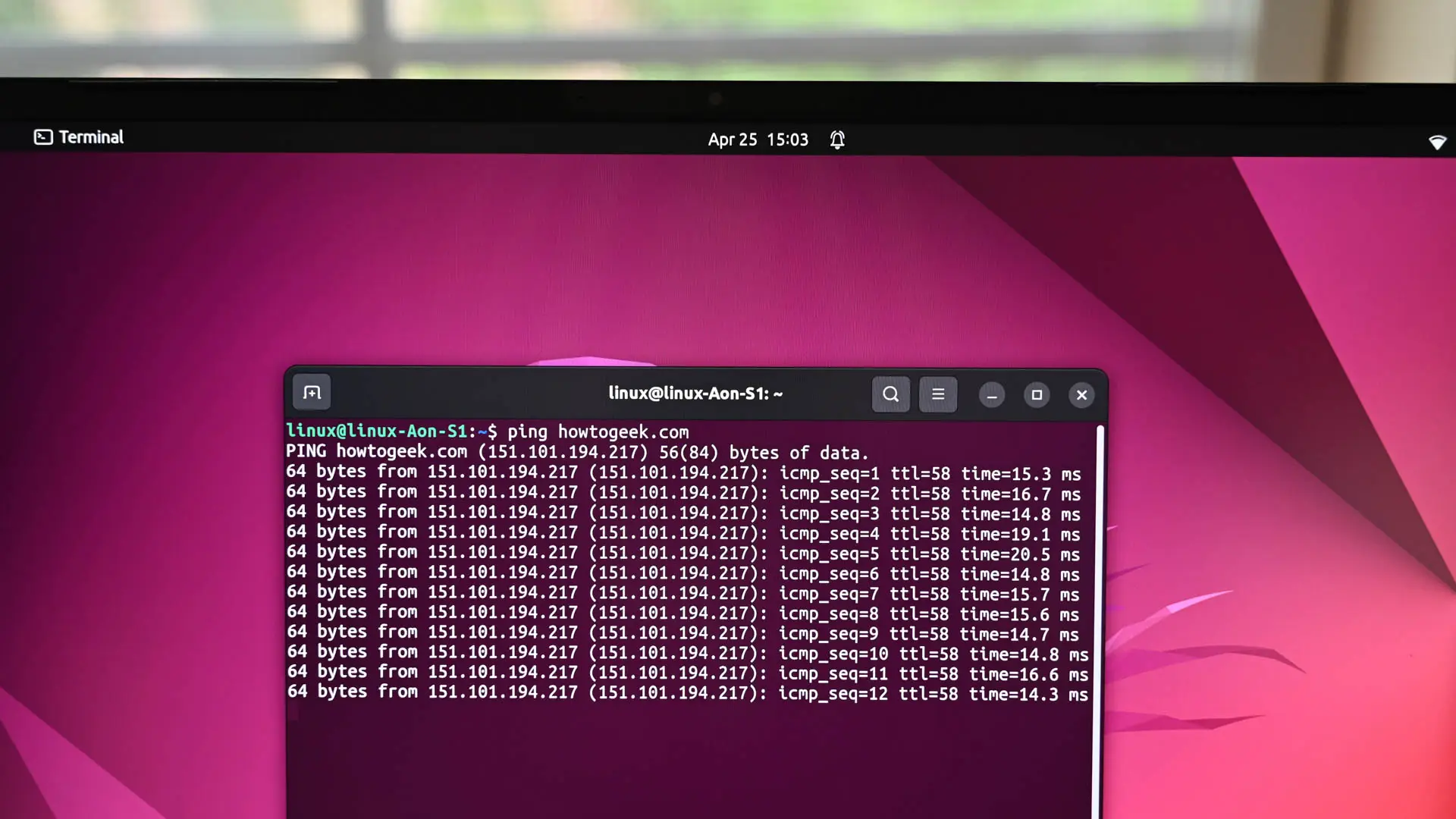
The moment your Linux PC powers on, it begins a silent conversation on your local network under your nose. Background system processes are checking in with servers, applications are on the hunt for new updates, and other devices on the network are signaling that they are up.
Want to know what this conversation is about? Just use the following tools to know what’s under the hood. Don’t get intimidated, as these raw data packets are constantly flying over the network. However, make sure you run these commands on your own PC (or network), or on any system you’re authorized to access.
Everyone should know about these tools not because they have to monitor their networks all the time, but some days you just wanna check which smart devices are up on your network. Or, if you feel something is suspicious, you can check which ports are open or what data packets are moving over your network. You don’t need to remember them all, but it can be helpful if you need them.
It isn't as intuitive as a user interface, but it is more powerful.
Nmap, also known as Network Mapper, is a popular open-source utility that discovers all the available devices (hosts) and open ports on your local network.
It comes pre-installed on many security-focused Linux distributions like Parrot OS. If it isn’t installed, you can install it using this command:
Once installed, you can check your Linux system’s IP address and run the nmap command:
Eventually, this will check your PC for 1000 common TCP ports and return all the open ports.
Source link