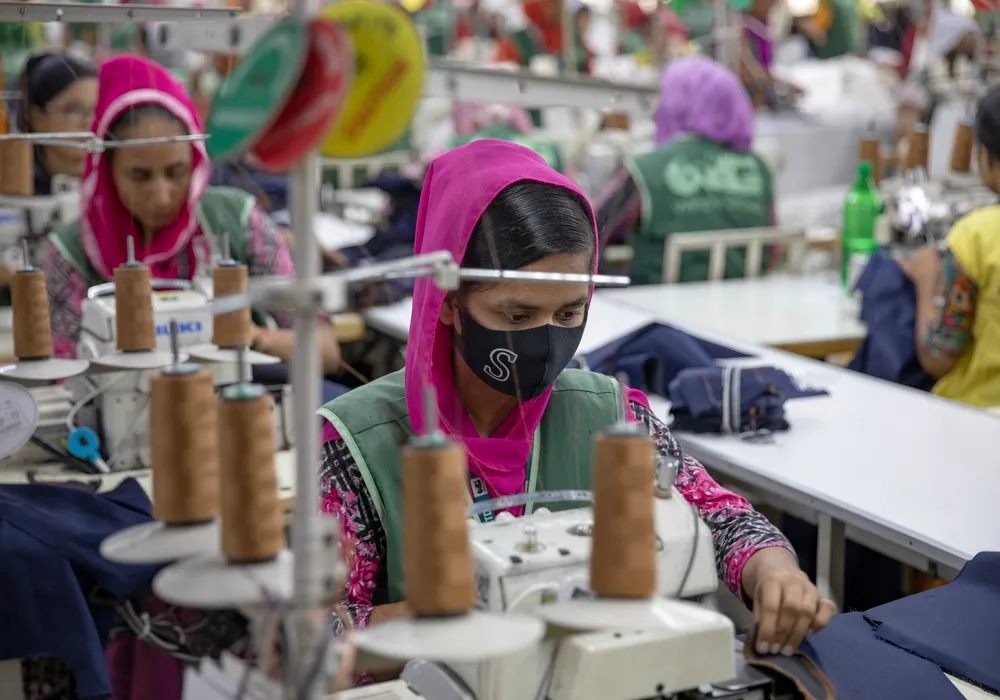
Bangladesh has three more years to graduate from least developed country status.
The South Asian nation was poised to lose the classification, given by the United Nations to countries facing the greatest structural barriers to sustainable development, such as extreme poverty, later this month. Last week, however, the UN General Assembly greenlit an extension of the so-called “preparatory period,” the transition between the UN’s decision that a country qualifies to leave the LDC list and its actual departure, until 2029. Bangladesh is expected to use the extra time to fast-track internal reforms, including those outlined in the government’s National Roadmap for Smooth, Sustainable and Irreversible LDC Graduation, and regularly report to the UN Committee for Development Policy.
Related Stories

Bangladesh Forms Garment Wage Board As Protests Escalate
On the Line: Bangladesh Plans Garment Wage Review as Worker Protests Mount
The news comes as Bangladesh contends with severe economic, security and labor pressures following its February 2026 elections. Graduation to developing country status, while a major development milestone, comes with significant trade-offs, including the loss of critical international support from programs that grant duty-free and quota-free market access, low-interest credit and other special trade preferences. The delay, on the other hand, will allow the country to benefit from preferential access to the European Union under the Generalised Scheme of Preferences until 2032, staving off—for a while, at least—threats to its competitiveness from rising energy costs, growing minimum wage demands and persistent market uncertainty from shifting U.S. tariffs.
For Mohiuddin Rubel, founder and CEO of Bangladesh Apparel Voice and a former director of the Bangladesh Garment Manufacturers and Exporters Association, the deferral delays what graduation will cost but doesn’t remove it.
Source link