

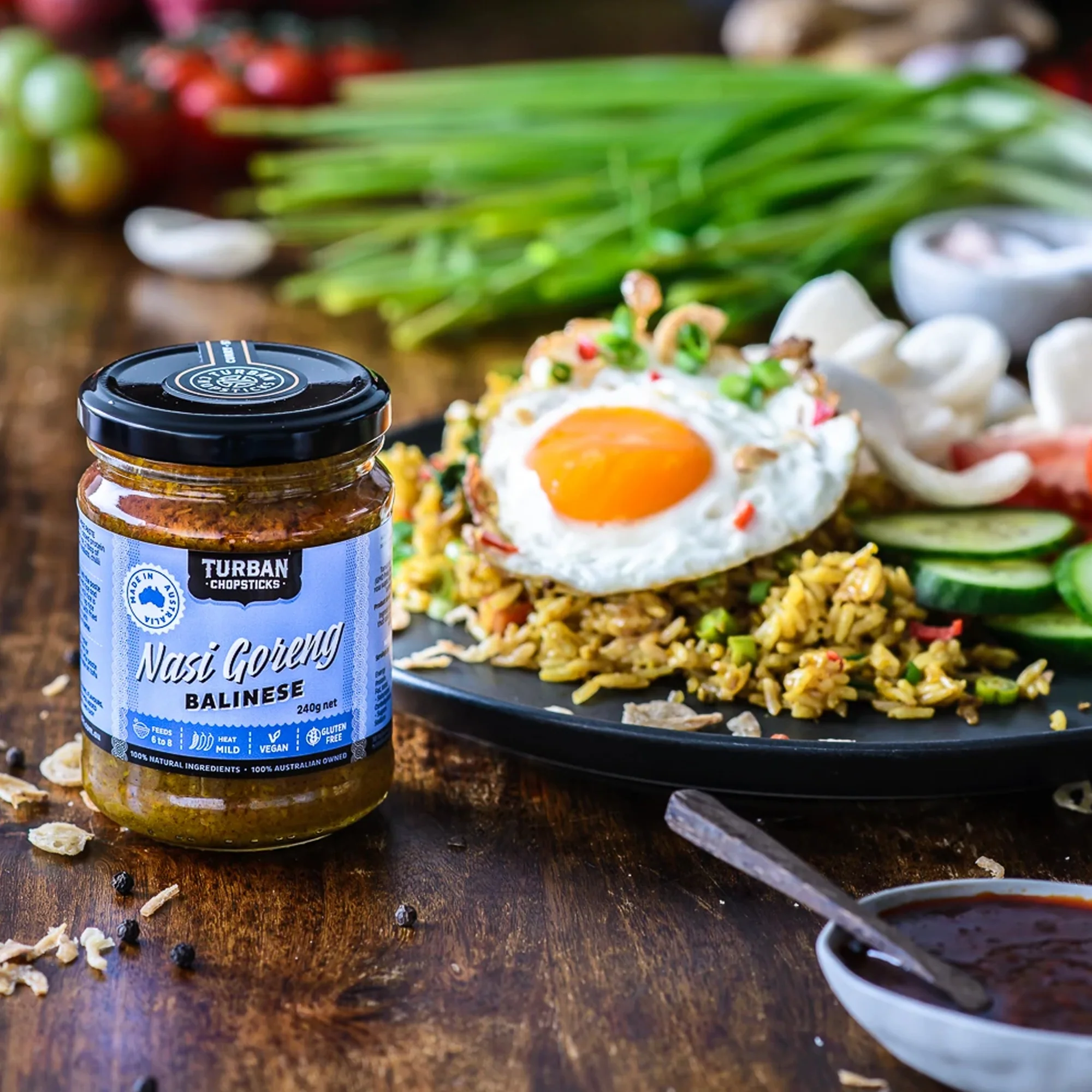
Perth food producer Turban Chopsticks rolled out an eight-flavour range of curry paste sachets on October 5. The 80-gram packs yield three to four home-cooked servings.
Shoppers wanting Asian meal bases can buy the smaller packs without committing to full-size glass jars.
Flavours include Korean Gochujang, Japanese Curry, Tandoori, Massaman, Vindaloo, Thai Green Curry, Butter Chicken, and Nut-Free Satay. Every plant-based 80g recipe caters to single-meal household preparation.
Single-use flexible sachets lower the entry price on retail shelves. They also cut down on pantry waste from half-used jars.
Smaller pack formats are gaining ground across supermarket condiment aisles as grocery bills climb. Buyers now look for exact-recipe portions instead of stocking multi-serve jars that spoil.
For independent brands, the format encourages shoppers to sample different regional dishes. Retailers gain higher inventory turnover and tighter shelf density per square centimetre.
Condiment giants and private-label ranges continue to crowd cooking sauces onto middle and bottom shelves. Turban Chopsticks is leaning on allergen-friendly and plant-based recipes to hold shelf space in mainstream Asian grocers and independent supermarket networks.
Success will hinge on repeat sales against cheaper mass-market pastes. Holding that shelf space demands steady volume across all eight recipes rather than reliance on a single standout dish.
Targeting metropolitan households that cook frequently at home, the brand is rolling out the sachets across Australian retail channels. Reorder rates over the next quarter will decide broader national ranging.
Rajiv reports on India and South Asia's retail landscape, tracking modern trade, quick commerce and the region's booming direct-to-consumer brands.
Source link





