My smart TV's internet connection was awful. Every few minutes, videos paused to buffer. The apps crashed when I tried to open them. Loading screens went on forever. Movie night became an endurance test. My internet plan was fine: 1,200 Mbps down. But my three-season room sits far from the router, and all that wall insulation plus the double-pane windows basically murdered the Wi-Fi signal.
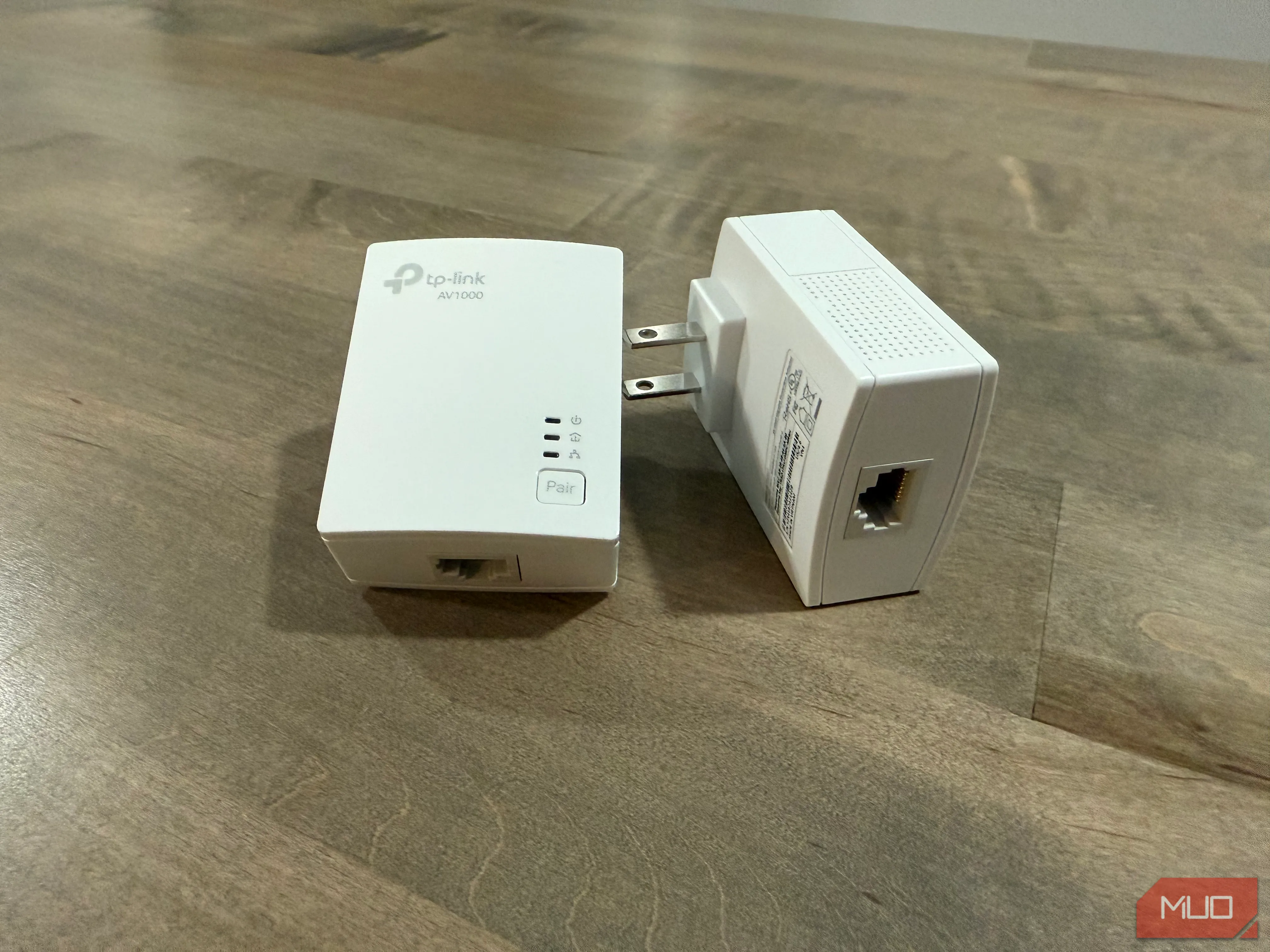
Running an Ethernet cable seemed impossible since the nearest connection point was across the house. Then I found powerline adapters, a $45 device that uses your electrical wiring as a network cable. This small gadget fixed everything, giving my smart TV the stable connection it needed through regular power outlets.
The three-season room looked perfect for a smart TV until I actually tried using it. My main router is down in my basement (and my nearest Wi-Fi access point is a few rooms away). The TV is way up at the other end of the house. Netflix and Apple TV would sit there spinning for minutes before anything happened.
Then there's how they built this room: insulation packed tightly in every wall, a double-pane sliding door, and matching windows. It might as well be a Faraday cage, as 4K streaming was a joke, and even 1080p buffering was a struggle. Even basic menu scrolling lagged. TV Wi-Fi chips are already weaker than phones, so my 7-year-old smart TV didn't stand a chance. I'd watch loading screens more than the actual content. Browsing Netflix took ages.
Source link