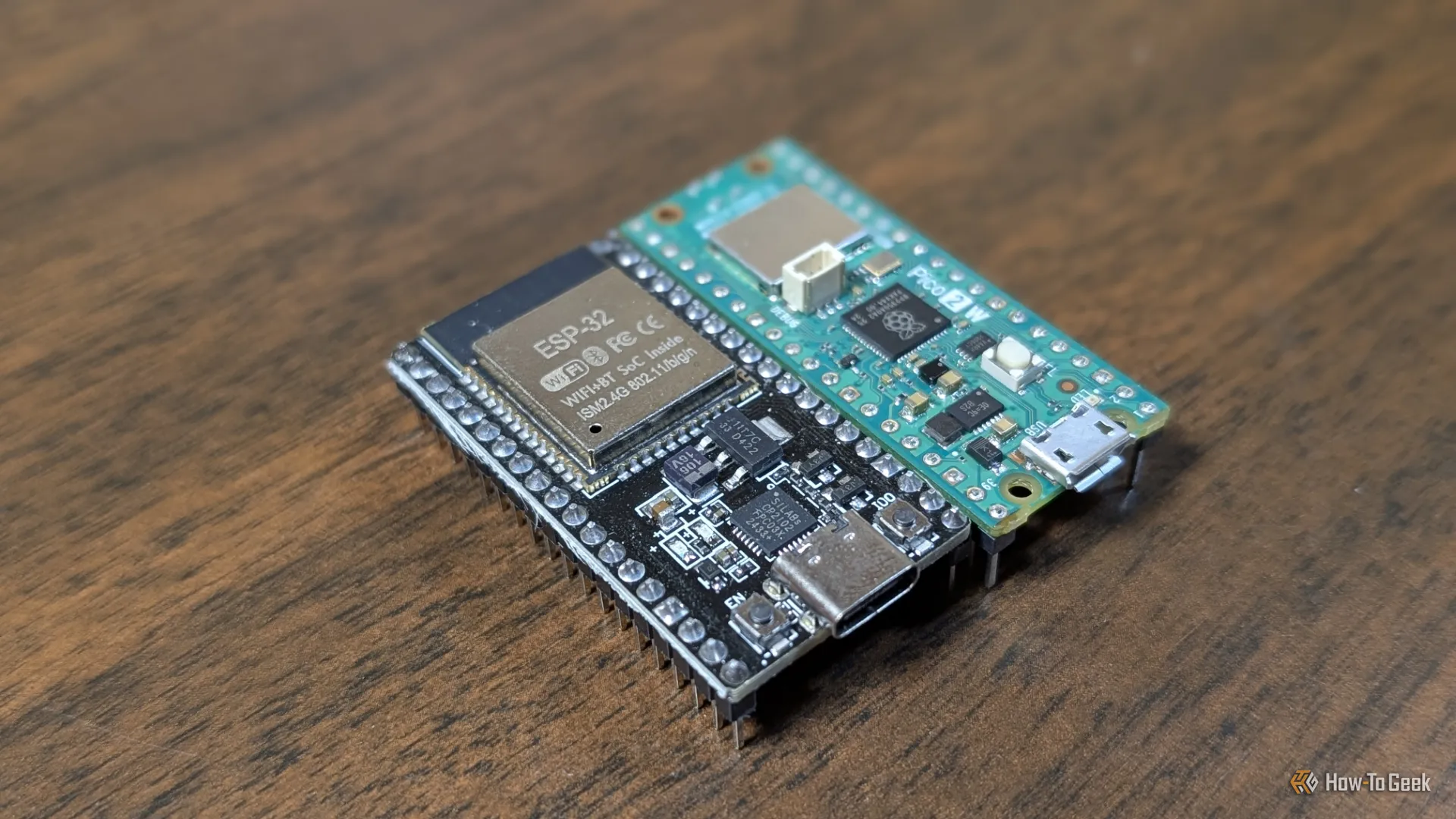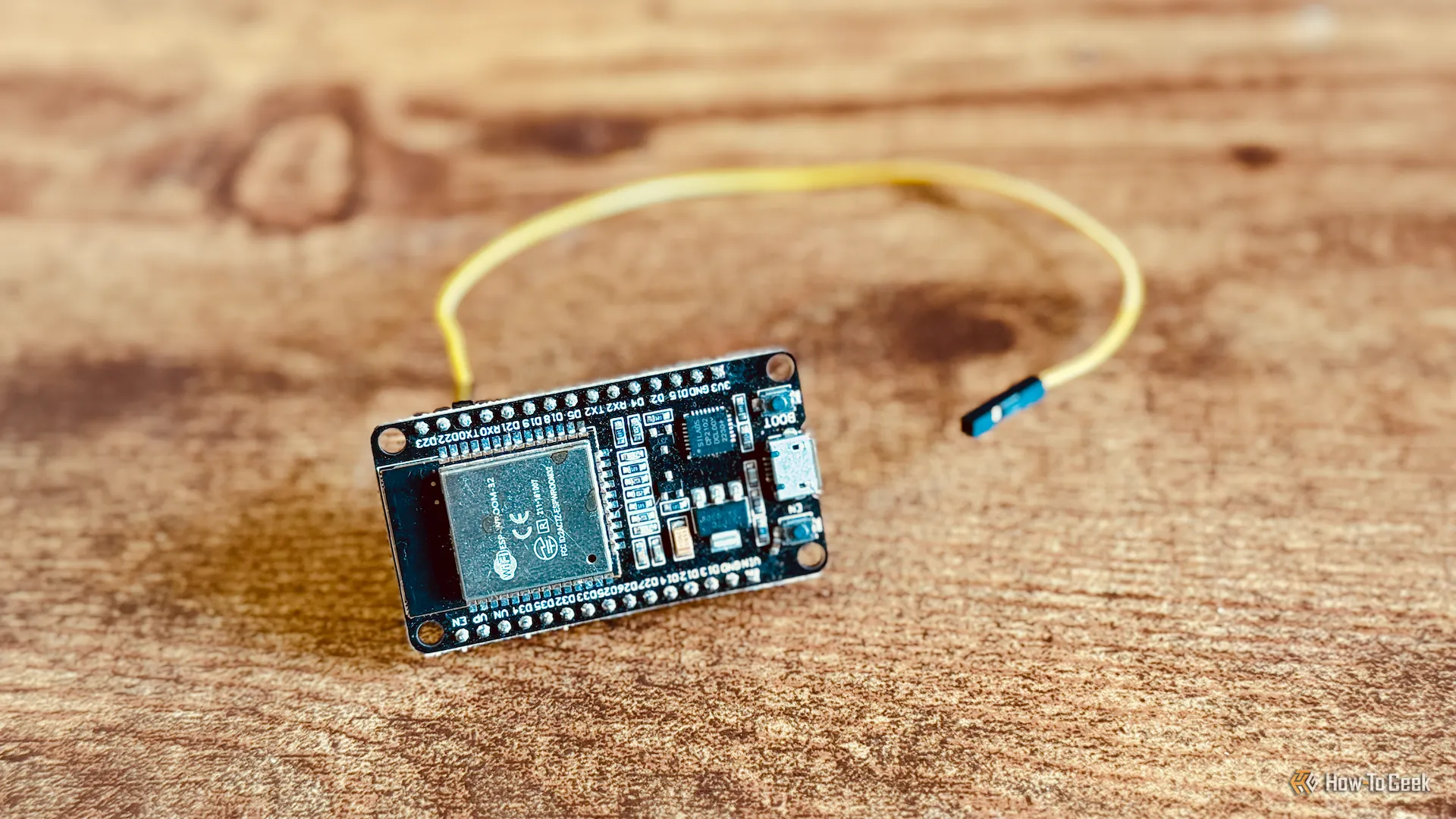
ESP32 boards can be incredibly cheap. They're so cheap that it's easy to fall into the habit of using a new board for each project that you build. Doing so may be wasting the capabilities of your ESP32s, which can handle more than one job at a time.
A Bluetooth proxy is one of the simplest ESP32 projects you can set up. You can use a Bluetooth proxy to allow your smart home server to communicate with Bluetooth devices, even when they're out of Bluetooth range of the server itself. The Bluetooth proxy communicates with the device over Bluetooth and passes the information back and forth to the smart home server over Wi-Fi.
Since many ESP32 boards have onboard Bluetooth and Wi-Fi, you usually don't need any additional hardware. ESPHome has a ready-made project that you can use to flash your ESP32 with the relevant code to work as a Bluetooth proxy, so it's as simple as hooking up your ESP32 to a computer and following the instructions.
Just because your ESP32 is running firmware that allows it to work as a Bluetooth proxy doesn't mean that's all it can be. It's still an ESP32, and there's potentially a lot more that you can do with it.
Many ESP32 boards come with general-purpose input/output (GPIO) pins . These are physical connections that allow the microcontroller to interact with external hardware, just like the pins of a Raspberry Pi. A GPIO pin can do simple things such as determining whether a switch is open or closed, or more complex things such as communicating with sophisticated sensor modules.
Source link