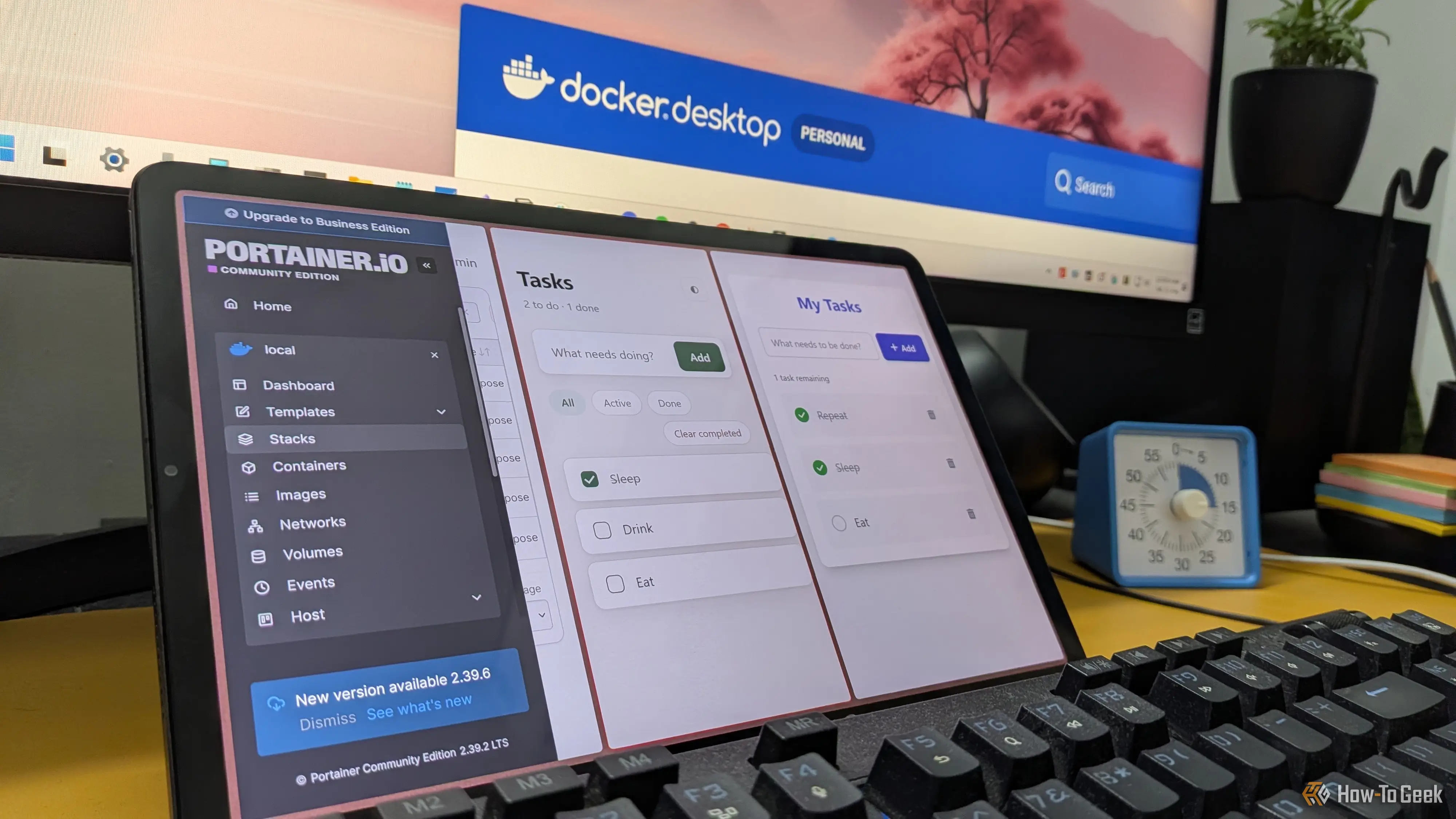
Have you heard people talking about Docker but have no idea what it is or if you need it? Docker is a fantastic tool that I think belongs in every homelab—here’s what Docker is, and why it is the one tool that makes my homelab easy to manage.
Docker is the name of a platform that containers run on. It’s both a command-line tool and a desktop interface, depending on which you prefer to work with.
Docker has become the industry standard for running containerized apps in both homelab and production environments. The Docker Hub, a repository of over 10,000,000 (10 million) public images, is also one of the go-to places to get applications to run inside Docker (or any other container manager).
Docker is one of the most well-known container managers, which also makes it one of the best-documented options to use. If you’re just getting started with containers, I’d highly recommend using Docker as your entry, it’s simpler, and the community has a ton of support available.
Docker helped to create the Open Container Initiative, or OCI, that a lot of other platforms now utilize. While Docker itself might not be free and open source in its entirety, the OCI that it helped start is.
For those who don’t want to use Docker, there are definitely other OCI-compliant platforms out there, including Podman, Containerd + Nerdctl, Rancher Desktop, or even LXC.
Some of these programs run on the Docker subsystem, and others use their own implementation of containers.
Source link