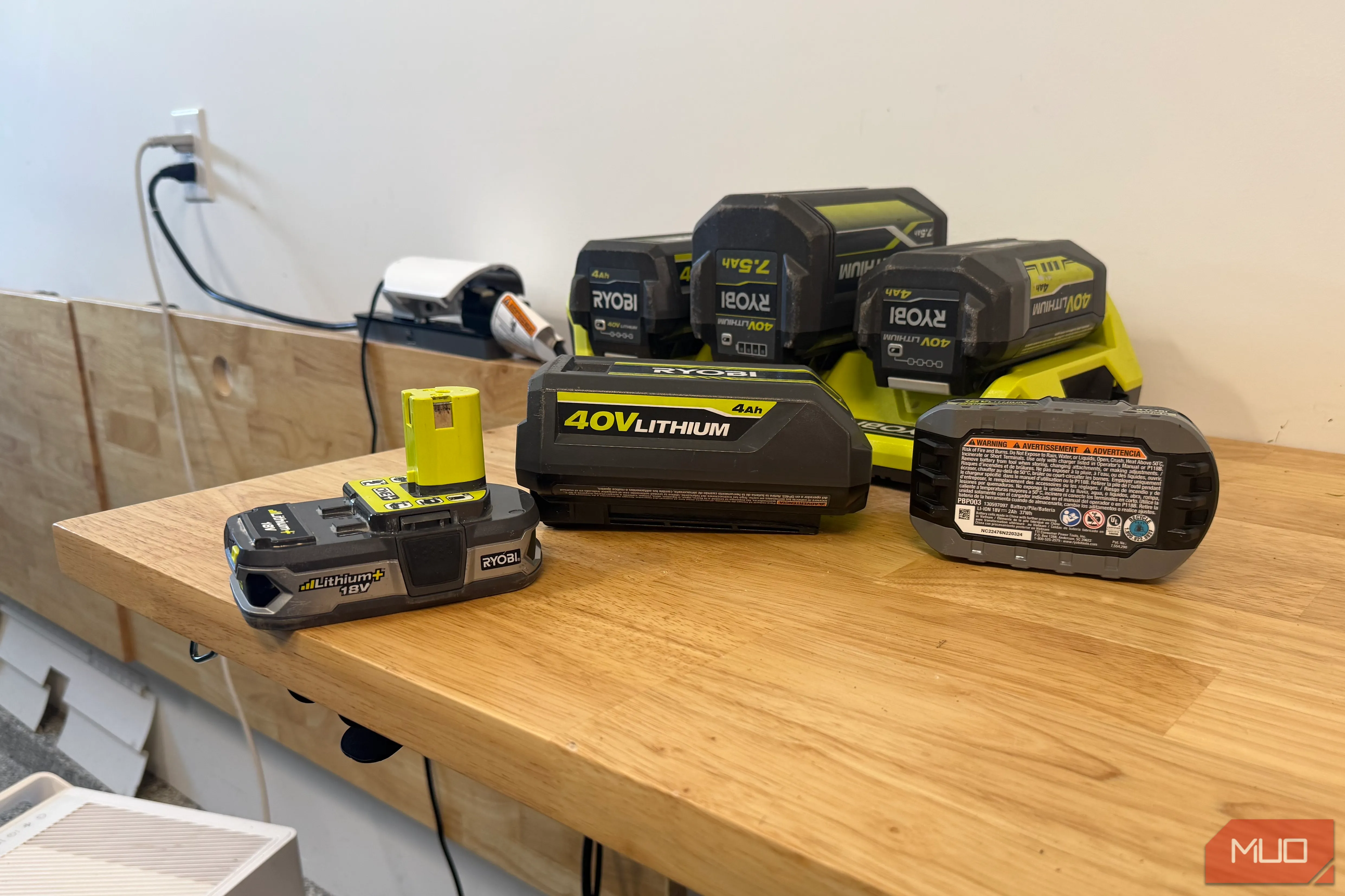
The tool aisle rewards big numbers. Ryobi's 12.0Ah pack towers over everything else on the 18V ONE+ peg. When your compact keeps dying halfway through a job, grabbing the giant looks like the fix. It usually isn't. More amp-hours mean more runtime and nothing else. They add zero power to a tool that's straining, and Ryobi itself has pulled apart the tidy math between amp-hours and strength across its own packs.
Put the biggest battery on the wrong tool and you eat the cost three ways: weight, fit, and time on the charger. This is where the 12.0Ah pays off, and where a smaller pack wins.
Amp-hours are a measure of storage, plain and simple. More of them means a tool runs longer before the pack taps out. Picture a fuel tank. The 12.0Ah holds six times what a 2.0Ah does, so a fan or a work light will run on it for ages. What it can't do is make a straining tool stronger. Torque and speed under load come from how fast the cells can dump current, and that's set by the cell tier, not the capacity.
Ryobi's High Performance packs, the teal ones with IntelliCell, use higher-output cells and onboard electronics that talk to brushless tools. That's the upgrade that stops a saw from bogging down in hardwood. I've clipped HP packs onto budget tools and watched them wake up, while a bigger standard pack on the same tool changed nothing but heft. If your tool sags, it wants a better cell, not more of the same.
Source link