

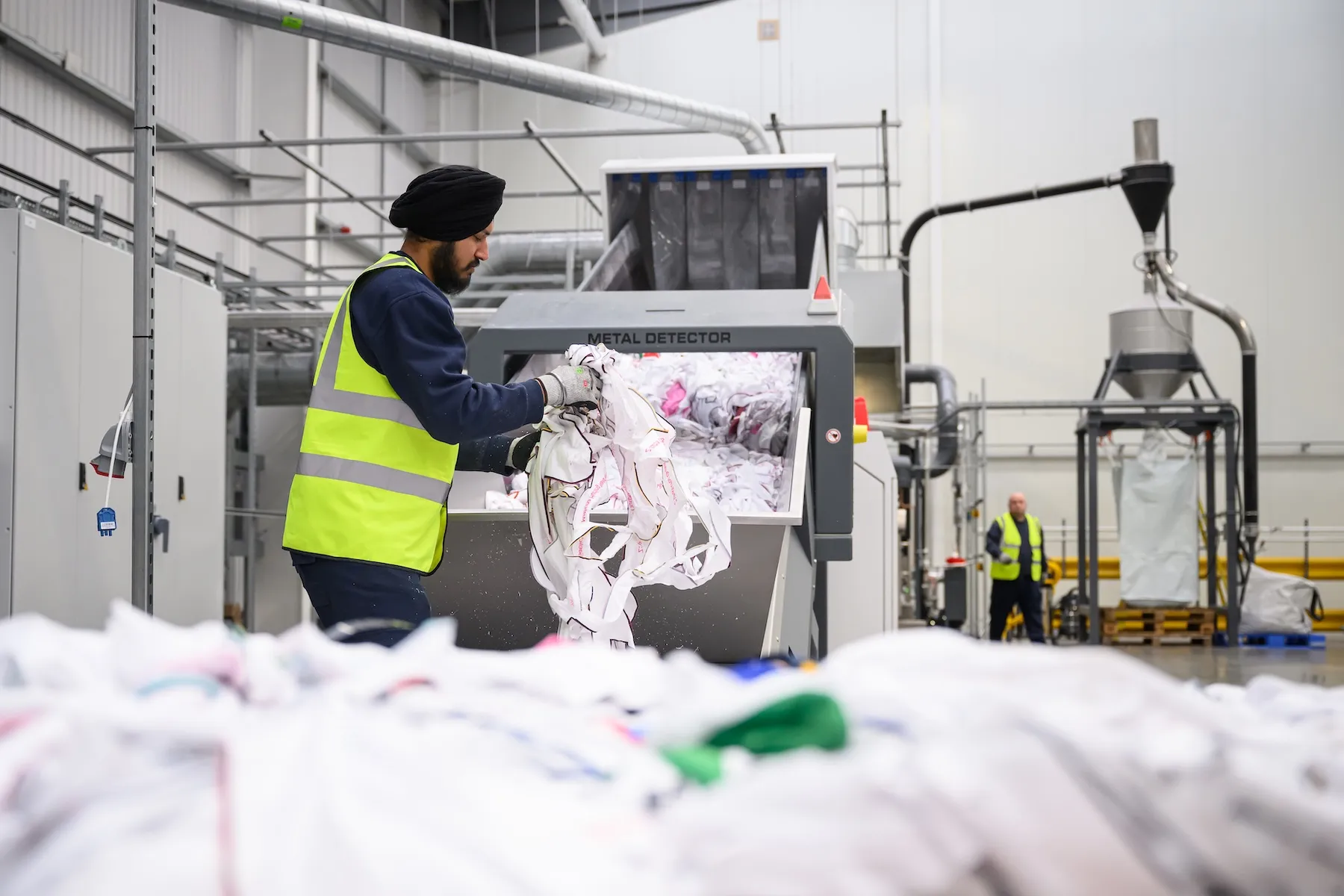
Textile-to-textile recycling may still face technology hurdles, but its biggest obstacle to scale is increasingly financial.
A new report from Accelerating Circularity argues that much of the sector remains caught in a “missing middle” between early-stage funding and mainstream commercial finance, where technologies may work but the risks surrounding their deployment remain too difficult for lenders to price.
The nonprofit’s “Systemic Bankability of Textile-to-Textile Recycling” framework assesses 13 variants across eight recycling and sorting technologies against 12 risk factors, ranging from feedstock and process performance to offtake, construction risk, regulation and the ability to transfer technology-performance risk away from lenders.
Related Stories

Where Do Broken Clothes Go? Everywhere but Fashion Brands
Newsom Vetoes Recycled-Content Labeling Bill, Citing Tariff Pressures
Its conclusion is fairly stark: Only three of those 13 variants carry no “red” factors that would prevent commercial financing today. Those are mechanical recycling using post-industrial waste, mechanical recycling using post-consumer waste and polyamide depolymerization using industrial feedstock.
All are mature technologies, and they cover only a limited portion of the waste stream fashion ultimately needs to tackle.
Mechanical recycling, for example, can address an estimated maximum 6.6 percent of separately collected post-consumer textiles, according to the report. Industrial polyamide recycling largely relies on sources such as fishing nets, carpet yarn and production scrap rather than discarded garments.
Thermo-mechanical recycling of sorted polyester and solvolytic polyester depolymerization each carry one red-rated risk factor. Enzymatic polyester recycling and molecular regeneration each carry two, while cellulosic regeneration and sorting and preprocessing carry three.
Source link





