On the Line is a weekly roundup of sourcing and labor quick hits in the apparel and footwear industry, from worker protests to boardroom maneuvering, tracking the developments shaping conditions on the factory floor and beyond.
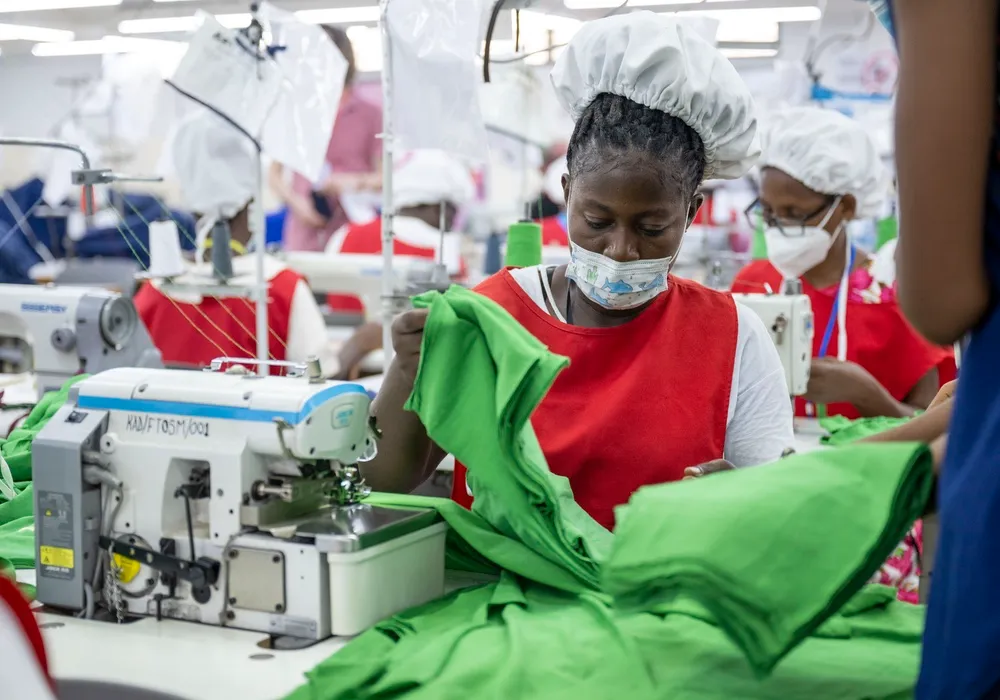
Heat stress from rising temperatures is taking a toll on worker health, safety and productivity in Ethiopia, Ghana, Lebanon, the Maldives, Senegal and Sri Lanka, with broader implications for the countries’ economies, a new set of studies from the International Labour Organization has found.
Related Stories

Indonesia Garment Worker Pact Results in 165 Sanctions for Harassment
SJ Fall Summit: Fashion Suppliers Seek Financing to Match Climate Demands
While “every single industry and every single workplace will stand to benefit from adapting workplaces to heat stress,” Andreas Floris, lead author of the studies, said at their launch on Thursday, the risks are most acute in countries with high levels of outdoor and labor-intensive employment. The extent to which heat stress reshapes the world of work also depends on a country’s climate conditions, economic and employment structures and adaptive capacity.
Climate change, according to the ILO, is poised to cause worsening job and economic losses across all six countries, especially under high-emissions scenarios, with 5,500 to 6,100 full-time-equivalent jobs expected to be shed in the Maldives and 5 million to 6 million in Ethiopia by 2060. The corresponding annual GDP losses could reach $310.3 billion in Ethiopia and $1.7 billion in the Maldives.
78 million. The impact would also be substantial in Lebanon, with 21,700 projected job losses, alongside 129,000 in Senegal, 145,000 in Sri Lanka and 550,000 in Ghana.
Source link