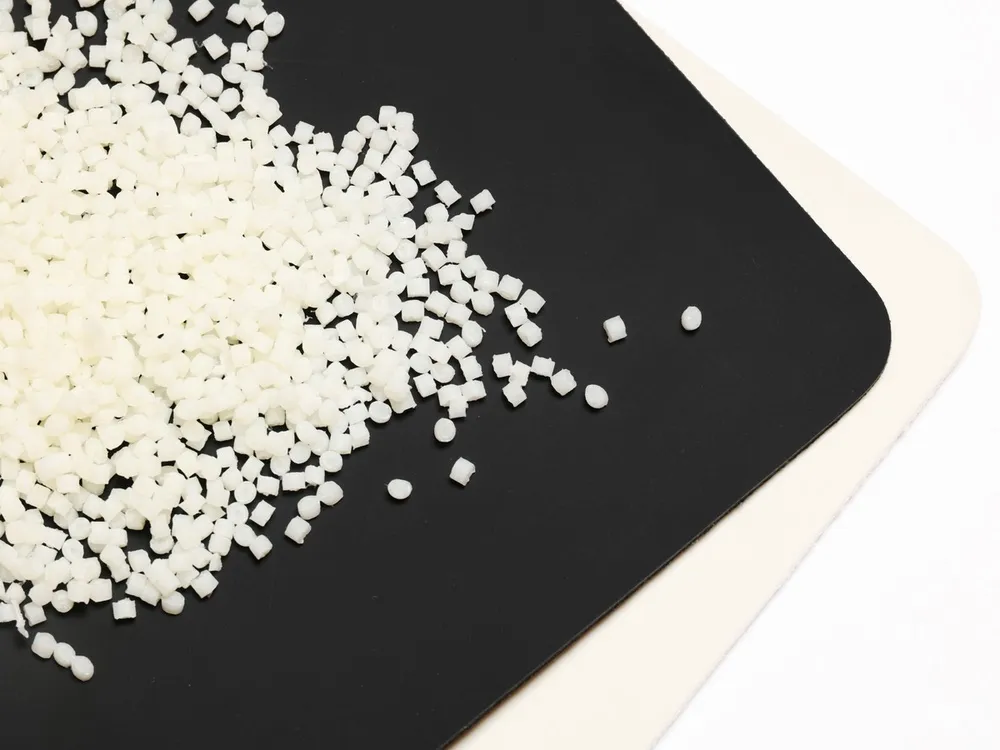
Newlight Technologies and Japan’s Prime Polymer have developed a polypropylene-based textile material they say can be dyed like polyester, addressing a limitation that has constrained the fiber’s use in apparel and footwear.
The blend combines Prime Polymer’s compounding technology with Newlight’s Aircarbon PHB biomaterial. Newlight said Nov. 2 that the partners had produced yarn and knitted and woven fabrics that accept conventional disperse dyes used for polyester.
Polypropylene offers low weight, durability and quick drying but is difficult to dye—with said resistance to conventional dyeing stemming from its molecular structure. Its nonpolar chains lack the chemical groups that give many dyes an affinity for a fiber, while tightly packed crystalline regions restrict dye penetration.
Related Stories

Material World: Nylon, Seaweed and Sportswear
C&A, Zalando Commit to Agricultural Waste Fiber
Manufacturers commonly work around those limitations by adding pigments to the molten polymer before spinning it into fiber. This colors the material during production but requires color choices early in the supply chain. Dyeing yarn or fabric later gives suppliers greater flexibility to respond to brands’ color requirements.
The partners say their formulation is lighter than polyester, with mechanical properties suited to apparel and footwear.
Aircarbon is Newlight’s brand of polyhydroxybutyrate, or PHB, a polymer the Huntington Beach, California-based company produces by feeding microorganisms methane and air. Newlight says the material can be melted and formed into fibers, sheets and solid parts.
Newlight describes Aircarbon production as carbon negative when powered by renewable energy, saying the process captures or destroys more greenhouse gas than it emits.
Source link