When a Windows laptop starts draining battery faster than usual, most people check Task Manager first. That works well for obvious problems like an app hammering the CPU, but plenty of power issues happen lower down. A USB device might refuse to power down, an app might keep requesting a high-resolution system timer, or your power plan might be configured in a way that keeps hardware running harder than it needs to.
Windows can check for those problems itself. The tool is called powercfg /energy, and the report it generates is much more revealing than you’d expect from a tool buried behind a command line.
powercfg /energy runs a diagnostic trace and checks Windows for common energy-efficiency and battery-life problems. By default, it watches the system for 60 seconds and generates an HTML report with everything it finds. Microsoft recommends running it while the PC is idle with your apps and documents closed, and my testing showed why that advice is worth following.
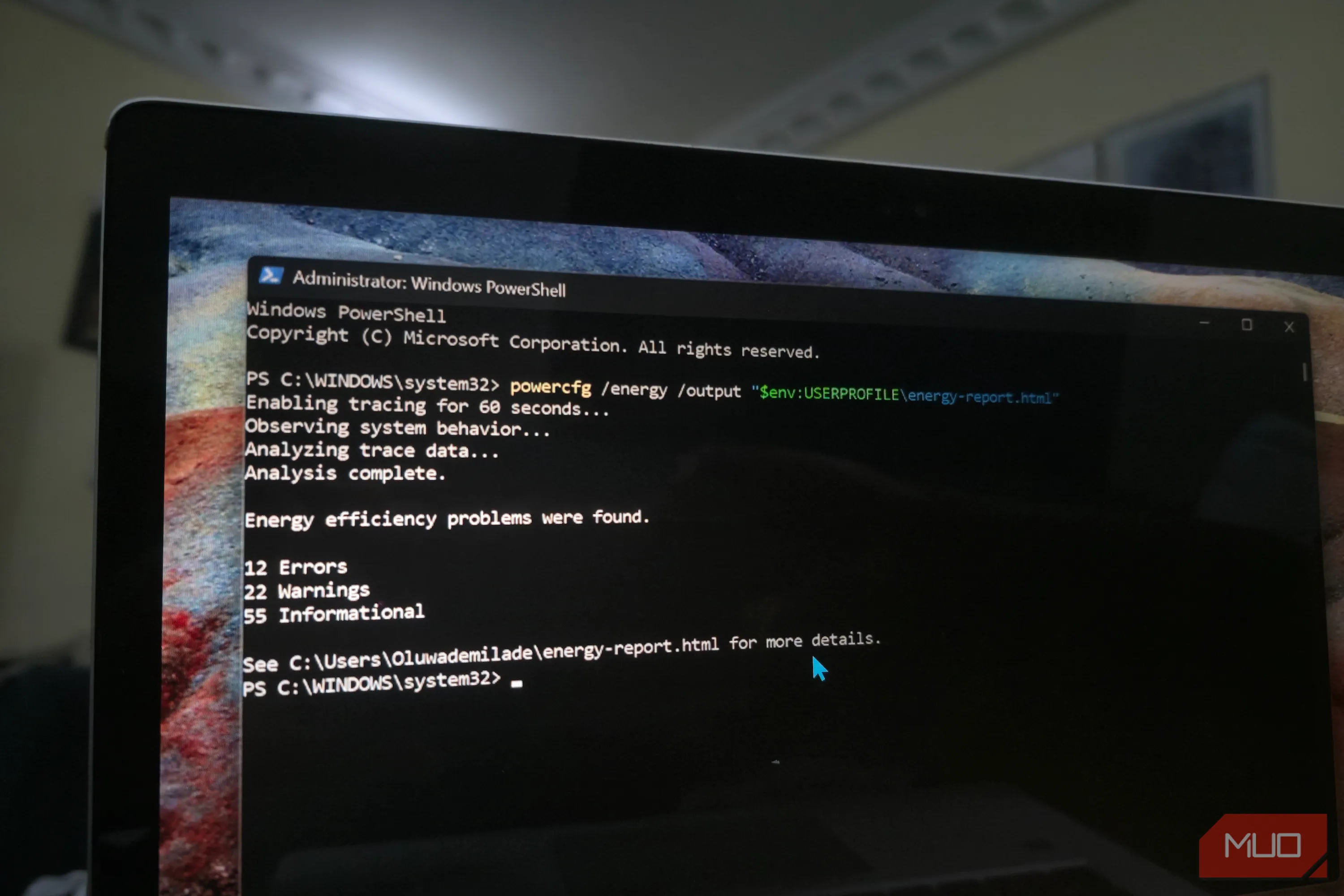
Leave the PC alone while the trace runs. When it finishes, Windows reports how many errors, warnings, and informational entries it found, along with the HTML file location. You can open the report immediately with:
You can also give Windows more time to catch an intermittent problem by adding /duration. The default is 60 seconds, so powercfg /energy /duration 120 extends the observation window to two minutes.
My first run also showed why an idle test gives you a cleaner result. 02% during the trace.
Source link