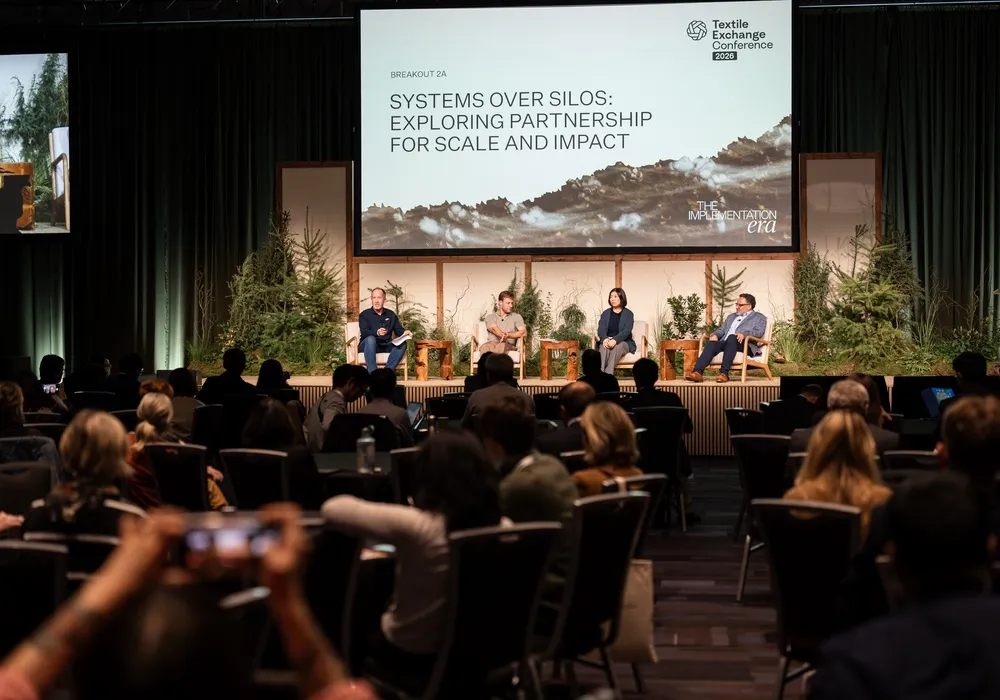
When Daren Abney, senior director of materials engagement at Textile Exchange, learned he would be moderating a panel about partnerships at the sustainability nonprofit’s annual meeting in Vancouver earlier this month, he barely suppressed a groan.
“We all know that partnerships are important,” he said at a session called, naturally, “Exploring Partnership for Scale and Impact.” “But I thought if we have to talk about partnerships in the same way, I might be ill.”
If there’s one thing the fashion industry can agree on, it’s that isolated corporate projects will not deliver its climate, nature and circularity goals. Reaching scale, experts say, requires shifting from “brand-to-land” silos to collective “brandscape-to-landscape” partnerships that give producers the financial support, shared infrastructure and long-term commitments they need to change how they operate—not more platitudes about collaboration.
But this is easier said than done. Systemic change requires systemic action, yet misaligned economic incentives, competing data demands and incompatible timelines routinely bog down implementation. The industry’s own production figures reveal the gap between ambition and action: While global fiber output hit a record 139 million metric tons in 2025, according to Textile Exchange’s latest materials market report, only 20 percent came from preferred production systems.
Emissions are moving in the wrong direction, too, rising 7.5 percent in 2023 and another 6.3 percent in 2024, according to the Apparel Impact Institute, which attributed the increases to growing fiber use, particularly of virgin synthetics like polyester.
“We know that as an industry, we are called to do more,” Abney said.
Source link