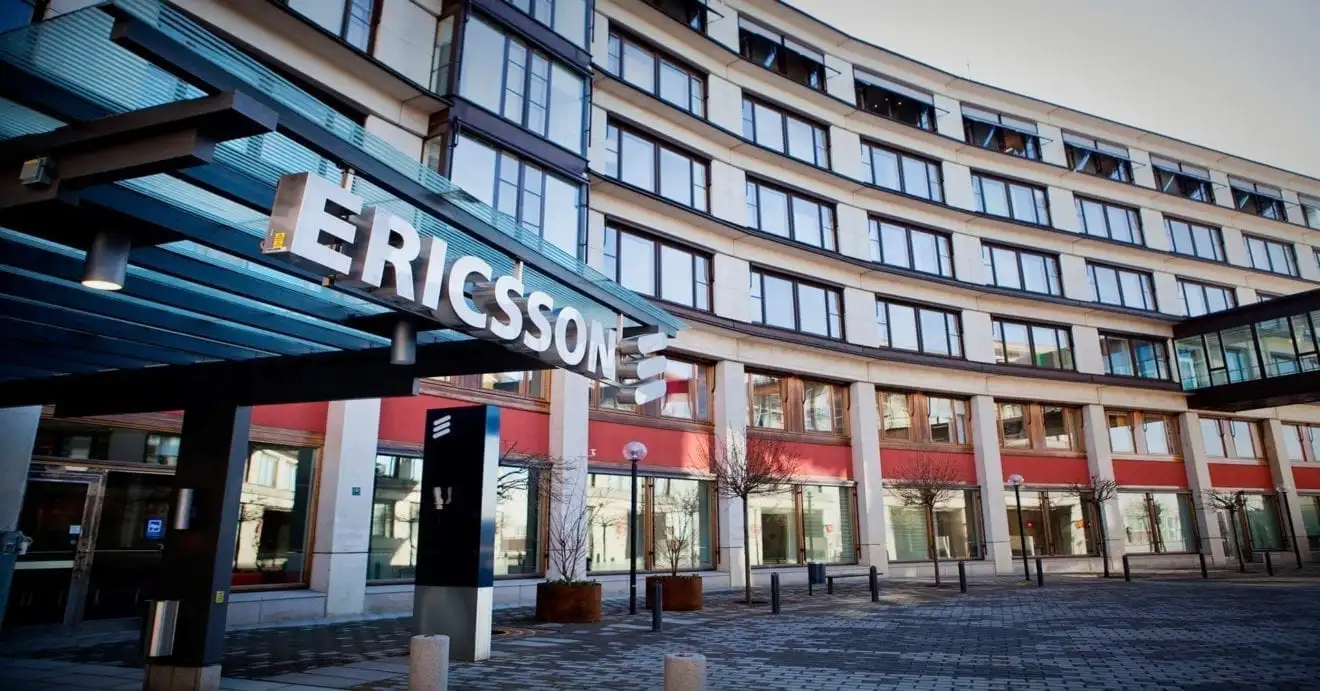
Telecom gear maker Ericsson reported a third-quarter operating profit before amortisation and restructuring of 10.1 billion Swedish crowns on Thursday, beating market forecasts despite a year-on-year decline.
The result exceeded the 7.87 billion crown mean analyst estimate provided by the company, even as core profit fell from 15.8 billion crowns a year earlier. Efficiency measures helped offset higher component costs.
Organic sales climbed 7 per cent to 59.5 billion crowns, running ahead of expectations of 55.4 billion crowns. Adjusted EBITA margin fell to 17.0 per cent from 28.1 per cent a year earlier, though it cleared the 14.2 per cent analyst consensus.
Chief executive Per Narvinger cautioned that rising component expenses will continue to squeeze profitability across upcoming reporting periods. “Looking ahead, the RAN (Radio Access Network) market is flat, geopolitical uncertainty remains elevated and component costs are a headwind to gross margin,” he said in a statement.
Equipment suppliers face a split market as carrier spending diverges sharply by territory. North American business delivered a slight sales increase during the quarter, aided by the scheduled timing of customer network deployments.
For network operators across regional markets, stagnant radio access investments limit near-term contract expansion. Rising server and memory prices divert capital expenditure into data centre capacity, leaving traditional cellular hardware vendors to protect margins through overhead reductions rather than volume growth.
Surging procurement of high-bandwidth memory for artificial intelligence clusters has tightened semiconductor supplies across the broader electronics supply chain. Telecommunications hardware makers must now absorb these elevated silicon costs or attempt to pass them to network carriers that are already restricting infrastructure budgets.
Source link