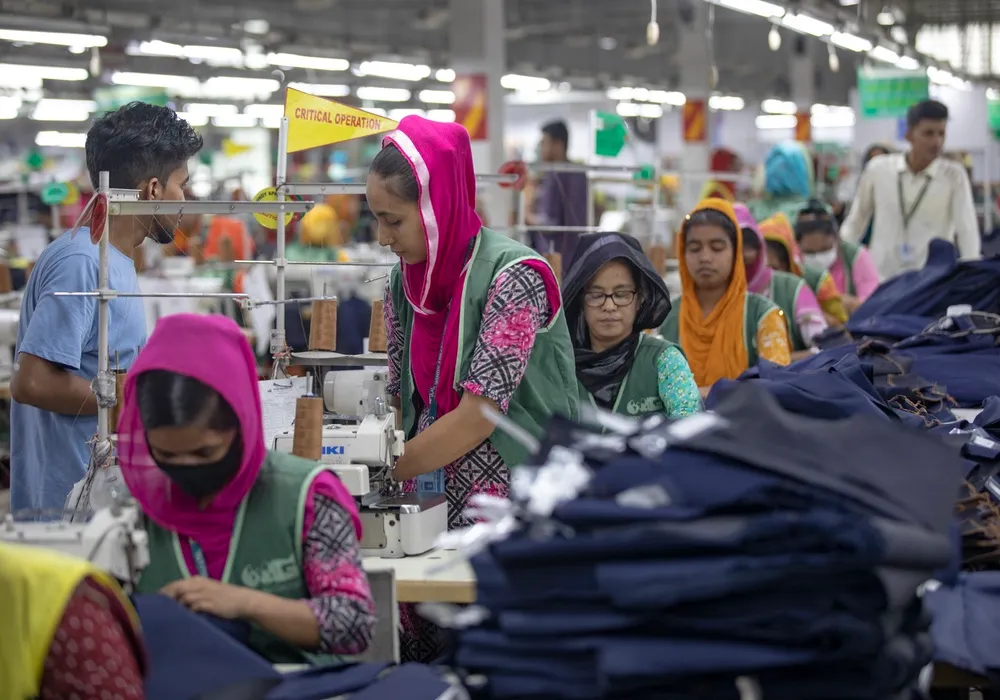
The cost of cooling Bangladesh’s overheating garment factories—and, by extension, their workers—isn’t as exorbitant as it might seem, a new report has found. Engineering studies commissioned by Cornell University’s ILR Global Labor Institute found that passive and active cooling measures carried manageable costs for most of the factories they examined, with average payback periods of one to four years through recovered worker productivity and reduced downtime.
The findings, part of a first-of-its-kind analysis, reframe extreme heat from a seemingly intractable burden borne by those at the lowest rungs of the supply chain into a solvable operational challenge that shared-financing structures can begin to address. By splitting the investment among brands, factory owners and concessional climate funds, the report argues, the cost to each party becomes less daunting.
Related Stories

Fashion's Heat Problem Is Becoming a Business Problem
FABRIC Act Returns with $100M Reshoring Bet
Who should pay to protect workers has become a topic of intense contention as companies tighten their purse strings amid unprecedented supply-chain volatility, Sarah Krasley, a visiting fellow at Cornell University’s ILR Global Labor Institute and one of the report’s co-authors, said during a webinar on Monday.
Yet the need to act has never been more urgent. Bangladesh ’s historical “six-season” climate cycle has effectively shifted into a prolonged, seven-month heat-stress season that runs from early April through late October. Across the eight Dhaka-area Tier 1 factories examined, the highest wet-bulb globe temperature readings—a measure that accounts for air temperature, humidity and radiant heat—occurred during the late-monsoon period of damp, humid heat when sweat evaporation is less effective.
Source link