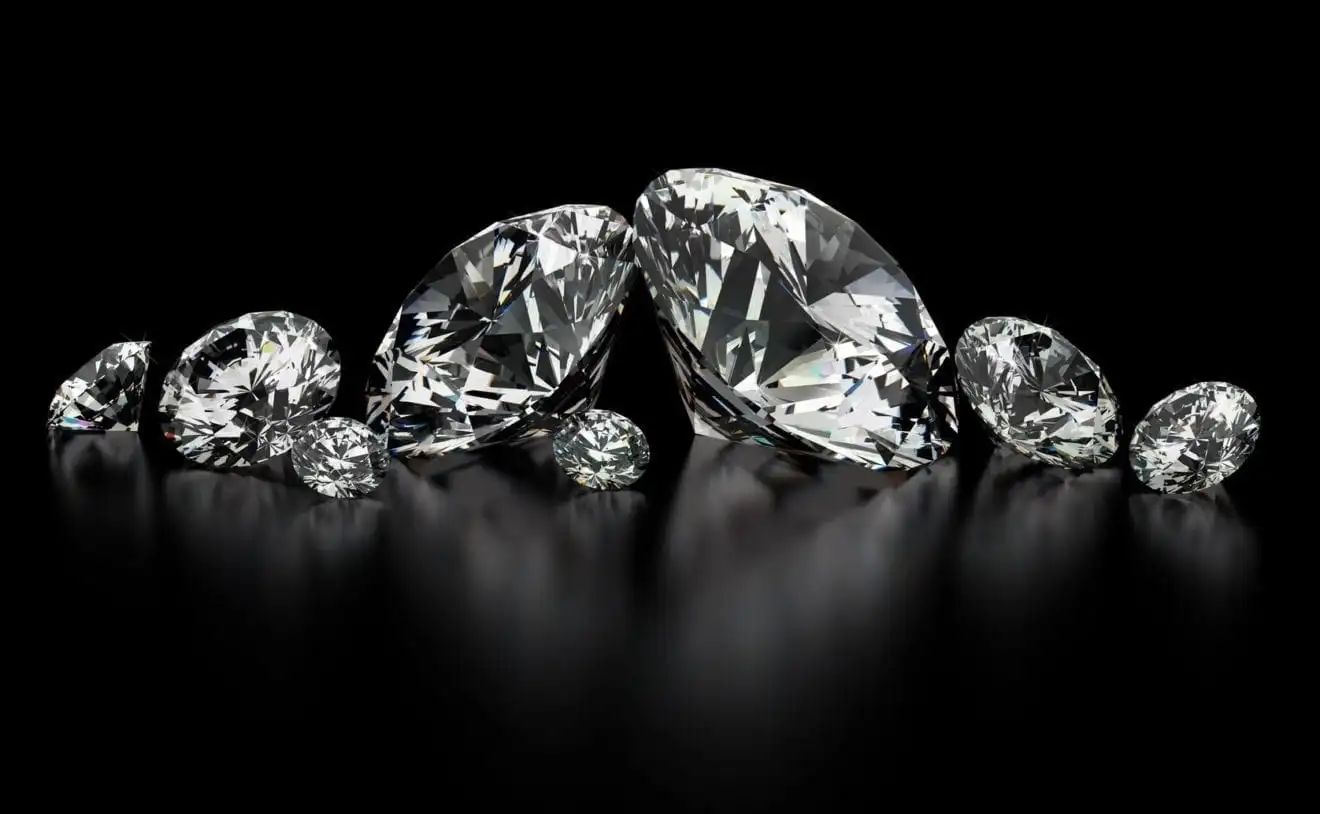
Chinese lab-grown diamond makers are cutting back gemstone production to supply thermal management components for artificial intelligence servers and semiconductors as retail prices drop.
Around 70 per cent of the 2 million carats produced annually at Feng Canjun’s factory in October 2026 goes into jewellery, but the Chinese entrepreneur is pivoting capacity toward advanced materials.
Feng plans to raise the share of functional materials at the facility to more than 50 per cent by 2030, reducing gemstone output as industrial demand accelerates.
At the Jiaruifu factory run by Feng Canjun in Zhengzhou, about 70 per cent of its 2 million carats in annual production currently supplies jewellery retailers. Feng plans to push functional material volume past 50 per cent by 2030, reducing jewellery output to a ceiling of 30 per cent.
Capital expenditure across central China is shifting away from consumer jewellery cutting lines. Henan Liliang Diamond redirected 1 billion yuan, equivalent to $149.18 million, from an existing gem-grade expansion programme to finance a new functional-diamond manufacturing project, according to a corporate filing.
The technical driver is heat dissipation in high-performance computing. Data centre electricity demand will more than double to roughly 945 terawatt-hours by 2030, according to an International Energy Agency forecast. That power load concentrates heat on silicon dies, creating bottlenecks for high-density AI clusters.
Chinese media reported that Huawei and Taiwan Semiconductor Manufacturing Company are exploring synthetic diamonds for chip cooling. Lenovo launched a consumer laptop in China incorporating a diamond-copper composite cooling element, while Intel chief executive Lip-Bu Tan made a personal investment in US diamond-wafer maker Diamond Foundry.
Source link