

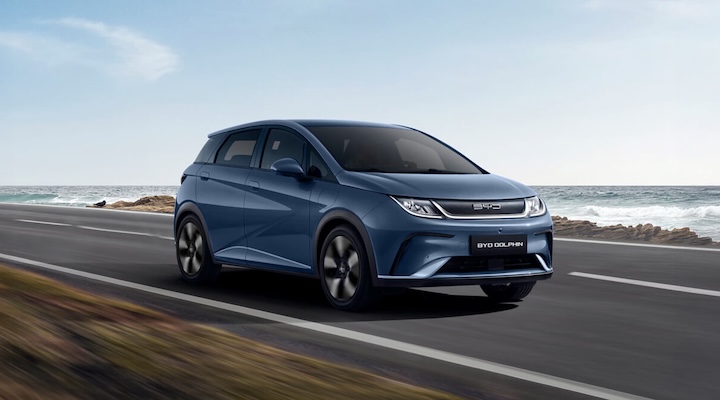
Since the Iran-US military conflict began earlier this year, disrupting global oil markets, Australia’s electric vehicle (EV) market has experienced an unprecedented boost.
With motorists facing sharp increases at the bowser and continuing uncertainty about fuel prices, many drivers have decided to go electric. EVs accounted for 25.8 per cent of total car sales in the first half of 2026.
One brand in particular is capitalising on this trend, and that’s the Chinese carmaker BYD, whose name was previously spelled out as “Build Your Dreams”. It is now outselling many far older and more established competitors in Australia.
Fifteen years ago, Elon Musk poked fun at BYD, saying it was not a serious competitor in the electric vehicle business. And until just a few years ago, hardly anyone in Australia had even heard of the brand.
So how did BYD become such a formidable competitor in the EV market so quickly?
BYD’s story began not with cars, but batteries. In 1995, 29-year-old battery specialist Wang Chuanfu founded the company in Shenzhen with a small team. BYD initially manufactured rechargeable nickel-cadmium batteries, before moving into lithium-ion batteries.
The company grew quickly, and by 2000, BYD had become Motorola’s first Chinese supplier of lithium-ion batteries. Nokia followed in 2002, and the same year BYD listed on the Hong Kong Stock Exchange.
In 2003, BYD entered the automotive industry by acquiring a struggling Chinese manufacturer. Its first model, the petrol-powered F3, arrived in 2005.
By then, BYD was already looking towards electrification. In 2008, it launched the F3DM plug-in hybrid.
Source link





