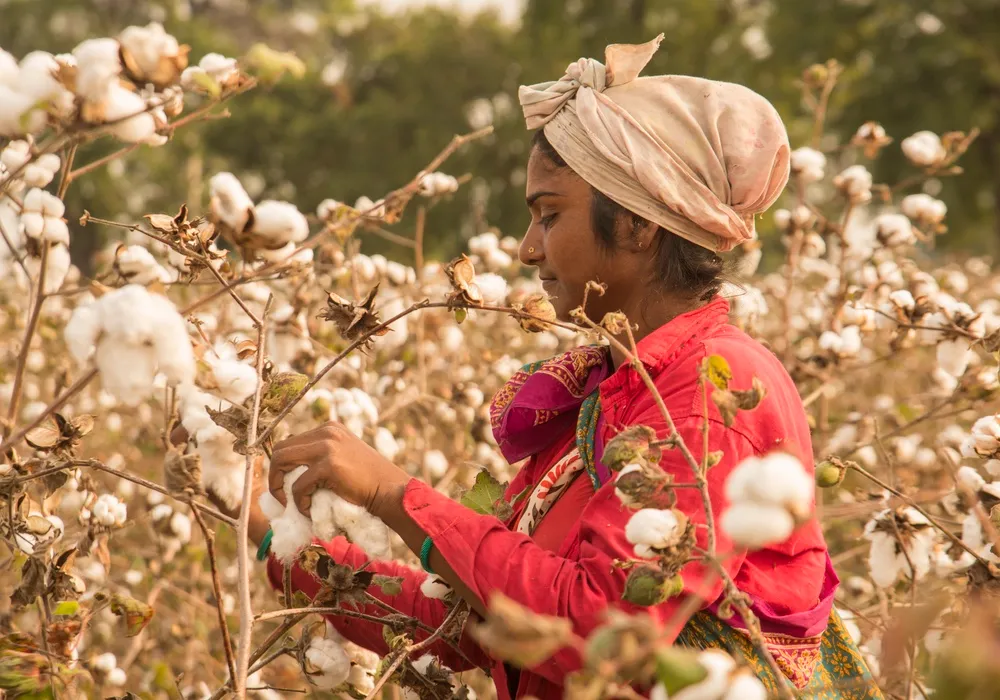
It’s official: The Better Cotton Initiative, better known as BCI, announced Tuesday that it is now operating as a regenerative standards system, a move it says will unlock a “triple win” for nature, farmers and industry as it promotes healthier soils, more resilient ecosystems and stronger farmer livelihoods.
The pivot from a nonprofit, multi-stakeholder organization to an external certification system comes as the fashion industry increasingly looks to regenerative cotton to anchor its sustainable sourcing, the world’s largest cotton sustainability organization said. The overhaul is intended to help “bridge the gap” between corporate ambitions and field-level realities by ensuring progress is powered by “genuine partnerships” with farmers and backed by verifiable results, BCI added.
Related Stories

Textile Exchange Reports Reveal Record Global Fiber Production
New York Backs Algae Sequins, Wool Waste in Textile Push
“When nature thrives, farmers thrive,” Nick Weatherill, CEO of BCI, said in a statement. “And when retailers and brands support those conditions through their sourcing and investment, they help build more resilient supply chains and future-proof the supply of cotton.”
Regenerative agriculture is sometimes hailed as “organic plus,” though that can be a reductive characterization. While organic cotton seeks to avoid environmental harm by banning synthetic pesticides and fertilizers, regenerative cotton focuses on outcomes such as rebuilding soil health, restoring biodiversity, capturing carbon and retaining water. Because “regenerative” lacks a single legal definition or regulatory enforcement, conventional farms can adopt regenerative practices, say, by planting cover crops and practicing no-till farming while still spraying synthetic pesticides and using GMO seeds.
Source link