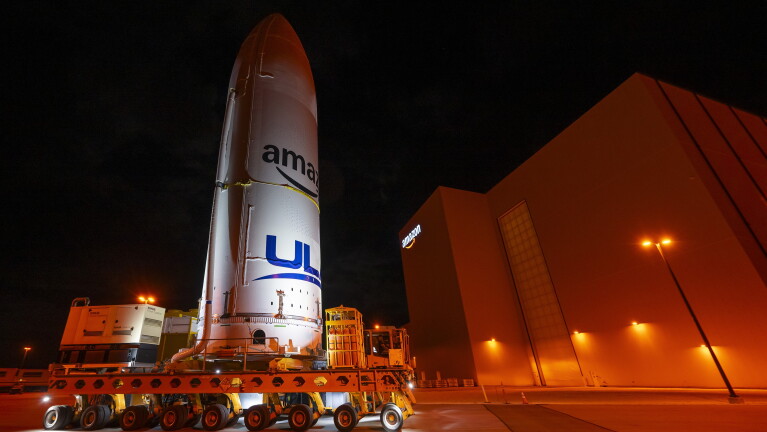
Amazon Leo ’s first Vulcan mission will carry 40 satellites to orbit.
Vulcan will launch 1,500+ first generation Leo satellites across 38 missions—more than any other rocket in the program.
Amazon’s investment in Cape Canaveral infrastructure will allow LV-02 to launch within weeks of LV-01.
Amazon completed its 1,000th satellite in early September, a milestone that makes Leo one of the largest, most advanced satellite production operations in the world. The program now has hundreds of flight-ready satellites ready for launch, and its next mission, Leo Vulcan 1 (LV-01), is targeting liftoff on November 13, 2026, from SLC-41 at Cape Canaveral Space Force Station.
LV-01 is Amazon Leo’s first launch aboard ULA’s Vulcan rocket, and it will carry 40 satellites to low Earth orbit, the largest Leo payload delivered to date. It is the first of 38 launches Amazon has on contract with ULA, one of several providers in a launch portfolio that also includes Arianespace, Blue Origin, and SpaceX. Leo launches with multiple providers by design, which gives the program the diversity and scale to keep deploying as vehicles come online.
40 encapsulated Leo satellites are stacked atop the Vulcan rocket inside Amazon’s dedicated vertical integration facility (VIF-A).
Vulcan has flown several missions to date for other ULA customers, and this inaugural launch for Amazon Leo includes several upgrades: It will be the first mission to fly a shorter, optimized version of ULA’s Centaur V upper stage, enabling Vulcan to carry more satellites to low Earth orbit. It’s also the first mission to fly in Vulcan’s powerful six-booster configuration, providing maximum performance for Leo missions.
Source link