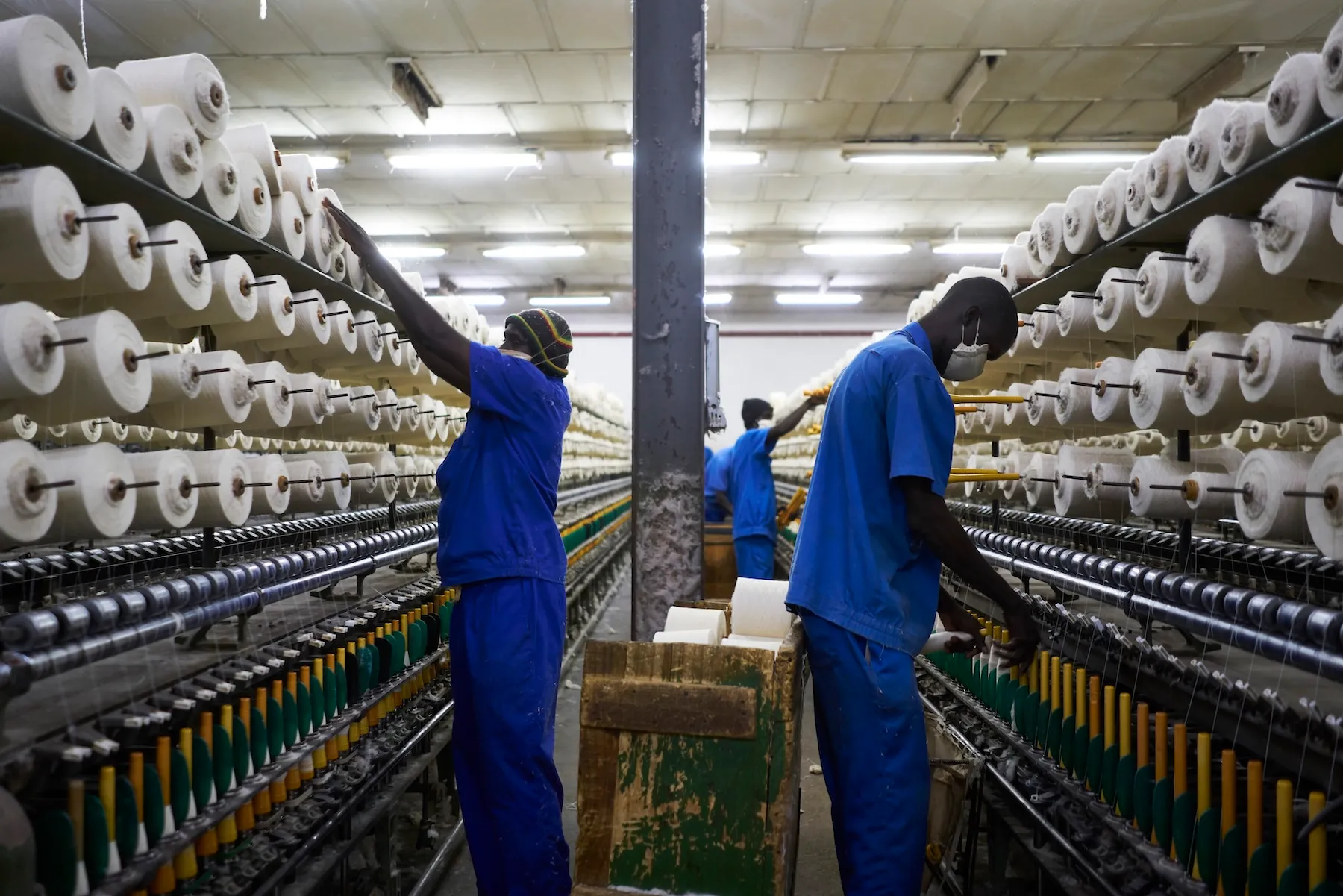
A coalition of African financial, research and media organizations is pushing to expand textile manufacturing across the continent, arguing that processing cotton domestically rather than exporting it as raw fiber could contribute $34 billion annually to Africa’s gross domestic product.
The initiative, called Africa Made It, launched its “Power, Protect and Purchase” campaign during the CANEX Weekend event in Lagos, Nigeria, with a strategy centered on lowering industrial energy costs, protecting domestic manufacturers from import competition and encouraging consumers to buy locally made clothing.
Related Stories

New Cotton Initiatives Target Farm Data, Textile Waste
Climate Change Threatens Cotton Supply as Brands Face Growing Sourcing Risks
The campaign targets a longstanding imbalance in Africa’s textile supply chain: Cotton-producing countries export much of their fiber for processing elsewhere, then import finished textiles and apparel. Spinning, weaving, dyeing and garment manufacturing, the stages that create industrial jobs and generate much of the value between the farm and the finished garment, often take place outside the countries where the cotton is grown.
According to the World Trade Organization, roughly 98 percent of cotton produced in West and Central Africa is exported as raw fiber.
Africa Made It projects that expanding domestic spinning, weaving and garment production could support nearly 2 million permanent industrial jobs, generate approximately $33 billion in annual household income and contribute $34 billion to the continent’s gross domestic product each year.
The campaign’s strategy rests on three priorities: securing competitively priced electricity for textile mills, introducing trade measures to support emerging domestic manufacturers and increasing demand for African-made apparel.
Source link