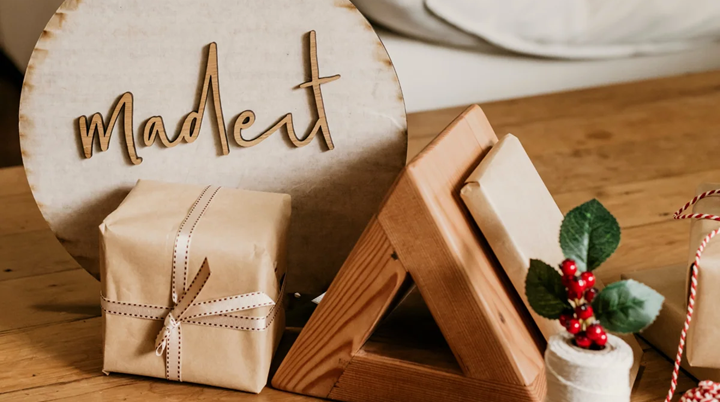
When Leina Broughton, the owner and CEO of artisan marketplace Madeit, came across a product listing featuring a photo of a child feeding chickens, something seemed off. Broughton had previously owned her own fashion label and immediately thought of it as a highly improbable photoshoot. Similar images were appearing across handmade children’s clothing and baby blanket listings. “I know, coming from a fashion background, that that image is absolutely impossible to catch on camera,” she told Inside Retail. “That’s not real.”
Broughton decided to notify Madeit’s artists of impending restrictions on generative AI imagery. The change came in stages before the platform-wide prohibition became effective in October. AI-generated models, backgrounds, illustrations and lifestyle scenes, including the digitally furnished interiors artists use to display their work, are effectively banned from the marketplace.
Her reasoning is based on Madeit’s verified-handmade ethos, which seeks to distinguish original craftsmanship from mass-produced merchandise. It’s a philosophy that has been established since 2025, when Madeit’s formal verified artisan badge was introduced as part of its ‘handmade not mass-made’ movement. “AI-generated imagery is the opposite of handmade,” Broughton said.
For Broughton, identifying artificial imagery has become almost forensic. She mentioned shadows remain a giveaway, as does the immaculate finish common to generated photographs.
The problem is, professionally commissioned images can raise similar suspicions, and it’s evidently a laborious verification process as she refuses to upload artisans’ photographs into AI detection software due to concerns of exposing their intellectual property.
Broughton believes the scrutiny is justified, saying customer scepticism and the disdain for AI imagery is already swirling in the platform’s sales.
Source link