AI is beginning to take over much of the work that has traditionally defined the security analyst's job. Investigating alerts, collecting evidence, correlating activity across tools, and executing response actions are becoming tasks that AI systems can perform on their own. As these capabilities mature, security operations centers (SOCs) will see major changes in how work is organized, how decisions are made, and what is expected of the people responsible for defending organizations.
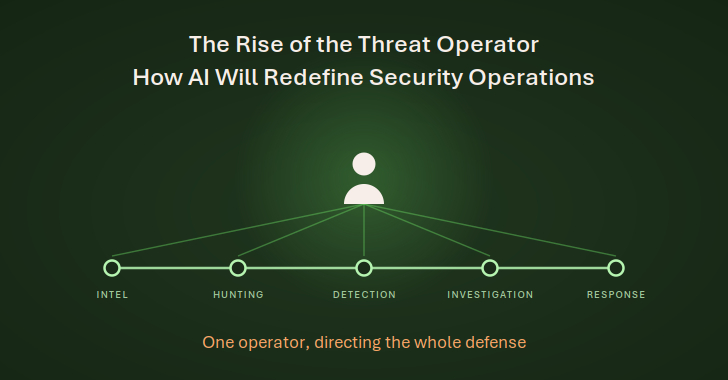
For security professionals, this is a chance to take on a much broader role. As AI assumes more of the operational workload, analysts can move beyond individual alerts and investigations to direct the defense across the entire security lifecycle. We call this emerging role the Threat Operator: an AI-native security professional who translates business risk into defensive priorities, directs AI-driven operations, and exercises judgment over the decisions and actions taken by those systems.
The impact reaches beyond day-to-day SOC work. It will change the skills organizations need, how security professionals develop expertise, and the career paths open to people entering the field.
The traditional SOC developed around specialized functions, each supported by its own tools and workflows. Threat intelligence teams study adversaries, detection engineers create rules, threat hunters search for activity that existing controls may have missed, analysts investigate alerts, and incident responders contain confirmed threats. These functions are closely related, yet the work often moves between teams through separate systems, tickets, and manual handoffs. AI is starting to tie these activities together. For example, intelligence about a new threat can lead to a hunting hypothesis, which can reveal a detection gap and produce a new detection.
Source link