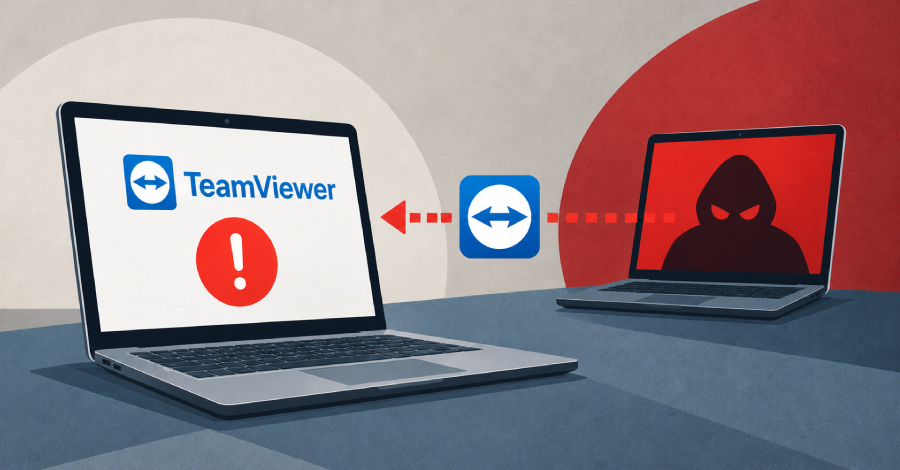
TeamViewer has fixed a flaw that lets the machine being controlled in a remote session attack the computer that connected to control it. In a TeamViewer session, the computer that connects and takes control is the viewer, and the machine it controls is the host.
A malicious or compromised host can exploit the flaw to crash the viewer's TeamViewer and, depending on the platform, may also run code on the viewer's computer. This works only after the user starts a remote-control session to that host. The fix is in TeamViewer version 15.83.
The flaw is tracked as CVE-2026-111585 and scored 8.8 out of 10, in the high range. It affects the TeamViewer Full Client on Windows, Linux, and macOS, the Windows Portable edition, and the Android Remote Control app, in all versions before 15.83.
For this flaw, TeamViewer's bulletin lists the Full Client, Portable, and Android app, but not the Host. The same 15.83 update fixes two other flaws in that bulletin that do affect the Host, so people running the Host should update as well.
Omri Dar, a researcher at security firm Remedio, published a technical account of the flaw on October 29. In this bug, he wrote, "the attacker is the host and the victim is the viewer."
In a remote session, the host tells the viewer how large its screen image is. The viewer uses that size to set aside memory, but the calculation can overflow and reserve too little. Screen data that arrives afterward is then written past the end of that space.
Source link