The alert is critical. The fix is known. And the ticket sits in a queue for days. Security teams understand the risk, but the people who keep applications available need proof that the change won’t break anything.
Their concerns are practical. An IPS protection could block legitimate traffic. A configuration change could interrupt a service. An endpoint policy could affect an application the business depends on. Without evidence, the recommendation waits.
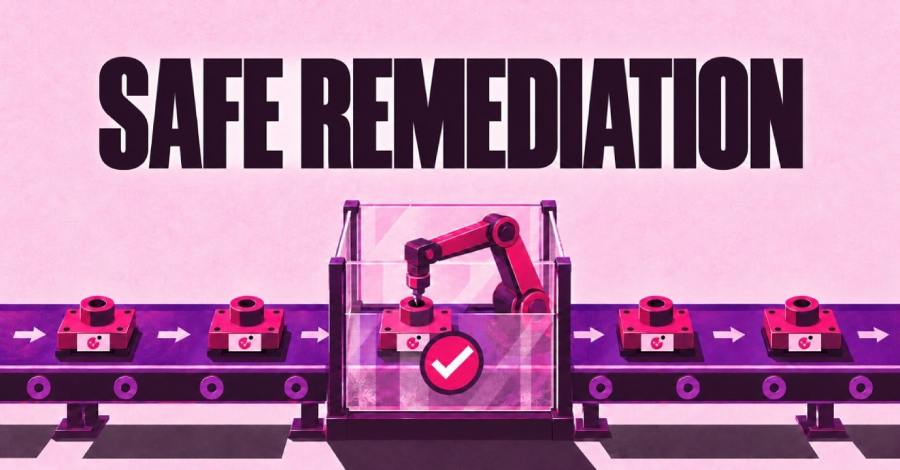
Safe remediation answers that hesitation with evidence. It tests the proposed action against your environment, applies the approved change, and confirms the result. Security and operations teams decide together, with facts.
Many organizations already own protection they don’t enforce. Signatures sit inactive or in Detect mode while teams weigh false positives, inspection capacity, and business continuity. Meanwhile, applications and traffic patterns change, exceptions pile up, and policies drift away from how the environment runs today.
In the Safe Remediation white paper, 47% of the organizations measured had less than 50% protection enablement. Much of the capability they need is already in their environments.
Turning everything on isn’t the answer. Every activation carries risk. Teams need to know which changes matter for a given exposure, and how each will behave in production today.
Safe remediation follows four stages: Observe, Prove, Act, and Confirm. Evidence carries the proposed response through each stage, with review and approval where required.
Observation starts with data your security and IT systems already produce. Vulnerability findings, IPS traffic, device utilization, endpoint policies, and configuration states show what surrounds the proposed change.
Source link