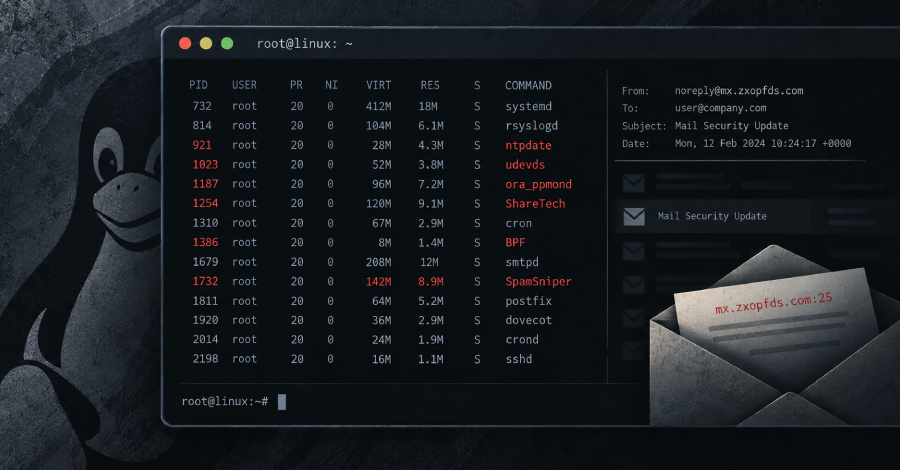
Linux backdoors targeting telecom and network appliances in South Korea and Taiwan have been disguising their traffic as email services and seemingly legitimate processes to blend in and evade detection.
Threat actors are known to name their malicious software after a legitimate operating system component or a process as a defense evasion measure. By borrowing the name of a real binary, it may make it appear less conspicuous among other Windows processes, lend it a false sense of trust, or be overlooked by an analyst during casual inspection.
However, the backdoors examined by Rapid7 have been found to go beyond imitating file names by assuming the identities of email security products like SpamSniper and ShareTech that are widely used in enterprise environments in South Korea and Taiwan.
According to vendor Jiran Group, SpamSniper is advertised as "Korea's leading email security solution" that defends organizations against spam, malware, and server attacks.
The malicious artifacts include a new BPFDoor variant and a BPF Rekoobe build used against South Korean targets, and a previously unreported Linux implant dubbed AVERAT that's delivered via a dropper and deployed against Taiwanese appliances.
"The BPFDoor variants seen against South Korean systems impersonate the PID file of SpamSniper, a Korean anti-spam product, and rotate through ten Linux daemon names," Rapid7 said. "Across the samples, each component adopts names and conventions designed to look unremarkable in the environment it targets."
BPFdoor and its many iterations were the subject of an extensive analysis by Rapid7 earlier this year, with the activity linked to a threat group dubbed Red Menshen (aka Earth Bluecrow, DecisiveArchitect, and Red Dev 18), which has targeted telecom providers across the Middle East and Asia going all the way back to 2021.
Source link