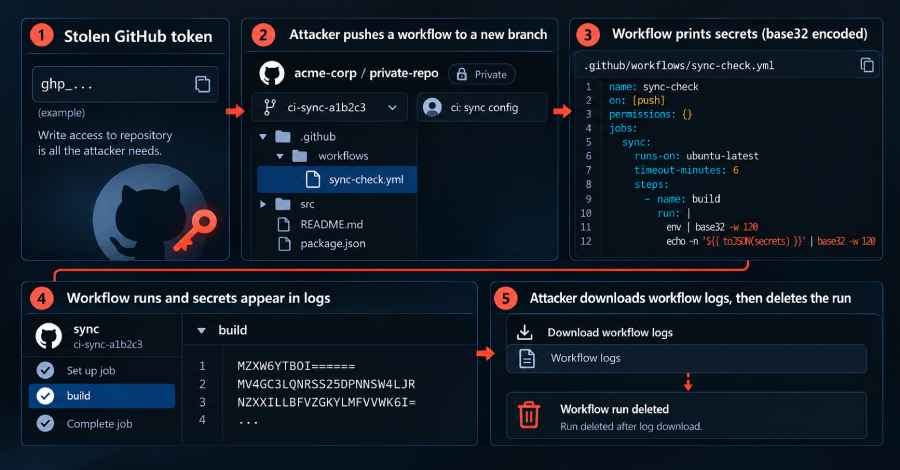
An automated campaign is using stolen GitHub tokens to plant workflows that print a repository's secrets into its GitHub Actions logs, which the attackers then download before deleting the runs. The attacks have succeeded in private repositories and GitHub Enterprise environments, according to an analysis by cloud security company Wiz.
A GitHub safeguard that pauses suspicious workflow runs stopped every public-repository run Wiz checked, but it does not cover private repositories or GitHub Enterprise Server.
Each workflow sits on a new branch named ci-sync- followed by six random characters. Deleting a branch, or the run it started, does not undo the exposure. Every secret the repository could read should be rotated, and the token that pushed the branch revoked.
Wiz has tracked the campaign since September 15 and calls it Gheist, after the user agent gheist that the attackers' tool sends with GitHub API requests.
Wiz has recovered more than 13,500 planted branches from more than 850 compromised accounts, from personal projects to the private repositories of enterprise organizations. Wiz's analysis does not say how many organizations had secrets exposed.
In private repositories and on GitHub Enterprise Server, GitHub audit logs show runs on the planted branches finishing and then being deleted by the gheist user agent. AWS CloudTrail logs show the organization's own workflows also running on those branches and assuming AWS roles, a sign that GitHub Actions ran there without approval.
In enterprise organizations, the tool cycled through tokens from several users and automation accounts within minutes and cloned private repositories before planting the workflow.
Source link