Researchers at Zhengzhou University in China have reviewed the potential applications of zwitterions in perovskite solar cells, concluding that the compounds could improve device efficiency and stability through mechanisms extending beyond conventional defect passivation.
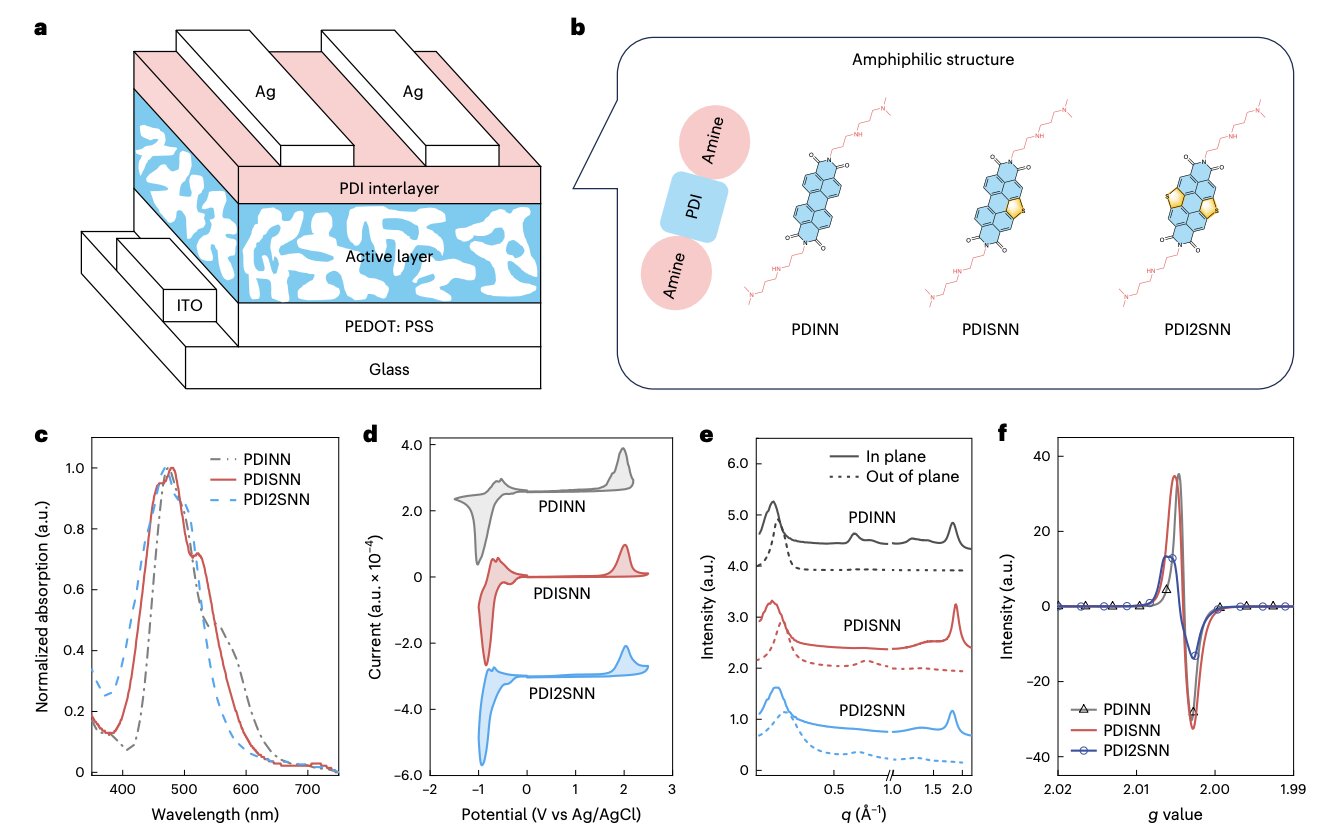
Zwitterions are electrically neutral molecules containing both positively and negatively charged functional groups. “This dual-charge structure gives zwitterions a broader interaction scope than conventional Lewis acid/base passivators, single ionic additives, or some polymer-based modifiers,” the scientists explained. “Depending on their molecular structure and location in the device, zwitterions can participate in defect passivation, crystallization modulation, and interfacial energy-level tuning within one integrated molecular unit.”
Previous research has primarily focused on using zwitterions to passivate ionic defects in perovskite absorbers. More recent studies have explored their incorporation into precursor solutions and application at device interfaces to reduce non-radiative recombination, suppress ion migration, and improve charge transport.
According to the researchers, the effectiveness of these mechanisms depends on the molecular structure, incorporation method, and location within the device, making zwitterions promising multifunctional additives rather than single-purpose passivation agents.
The review identified three main functions of zwitterions within the perovskite absorber: defect passivation, crystallization regulation, and phase stabilization.
The researchers explained that the oppositely charged groups can interact with defects such as undercoordinated lead ions, halide vacancies, and defects associated with organic cations, reducing charge-carrier trapping and non-radiative recombination.
Betaine-type zwitterions have been the most extensively investigated, although amino-acid-based and other functionalized compounds have also shown promising results. 06% in a wide-bandgap device.
Source link