This article has been reviewed according to Science X's editorial process and policies. Editors have highlighted the following attributes while ensuring the content's credibility:
Solar cells, devices that can convert sunlight into electricity, are now widely used in many countries worldwide. While most cells on the market today are primarily made of silicon, energy engineers have been exploring the potential of other materials that produce an electrical voltage when light is directed at them.
Some of the most promising alternatives to silicon are organic materials, which are based on carbon. Organic solar cells could be lighter, less expensive and more flexible than silicon cells, yet they typically also have lower sunlight-to-electricity conversion efficiencies and shorter lifespans.
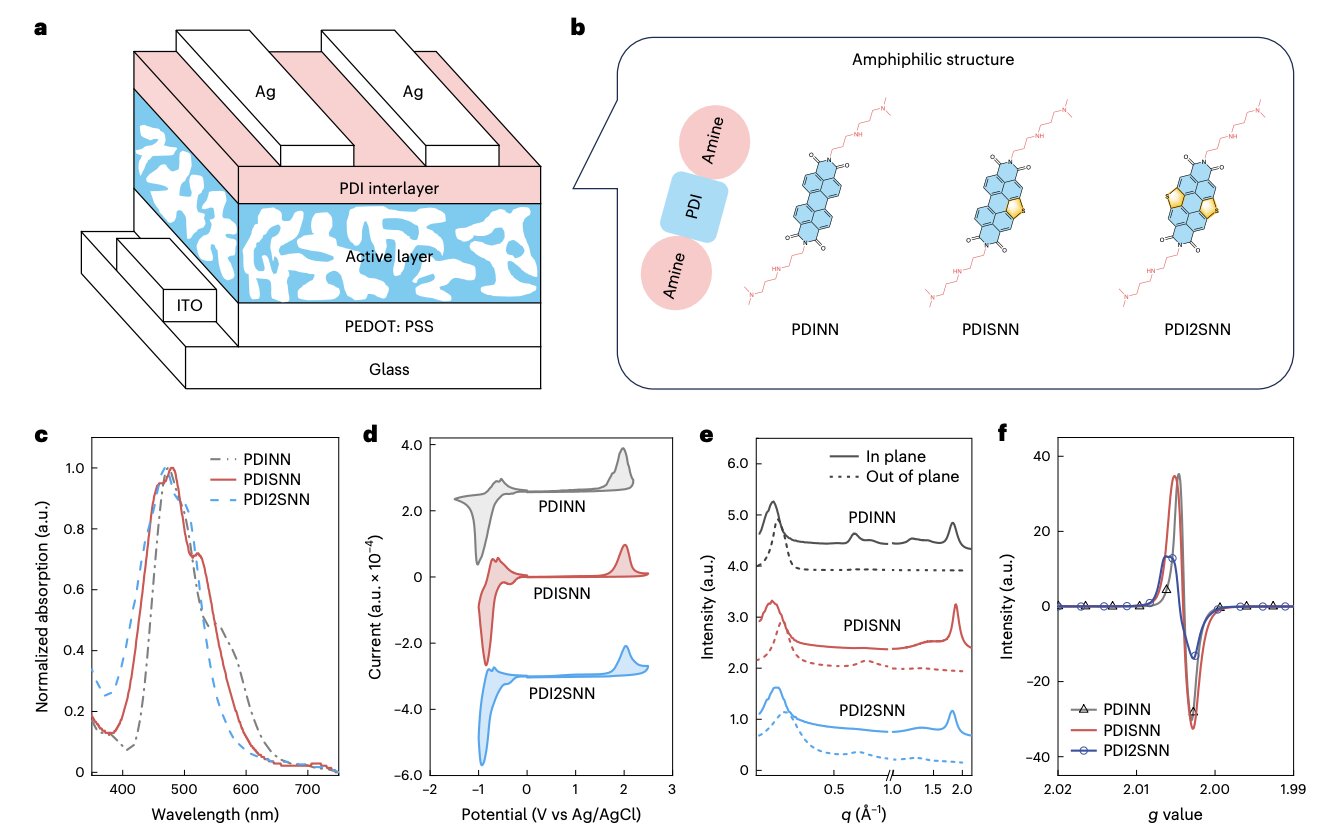
One way to improve the performance of organic solar cells is to apply specific coatings between the light-absorbing layer and the electrodes that collect electrical charge and connect a cell to an external circuit. These coatings could facilitate the flow of electrical charges toward the electrodes, which could in turn improve a cell's power-conversion efficiency.
Researchers at Beijing University of Chemical Technology, the Chinese Academy of Sciences and Linköping University recently developed a new two-step approach for controlling the molecular orientation of coatings applied to organic solar cells, which could in turn boost the cells' power-conversion efficiencies.
Their proposed method, presented in a paper published in Nature Energy , entails treating an organic light-absorbing layer with one solvent and then applying a coating material dissolved in a second solvent, which prompts the coating's molecules to align more upright.
Source link