
This article has been reviewed according to Science X's editorial process and policies. Editors have highlighted the following attributes while ensuring the content's credibility:
Wireless charging has already transformed how people power phones, wearables and even electric vehicles. The next leap is to advance wireless technologies beyond delivering electrical energy to directly producing nonelectrical outputs, such as optical, thermal and mechanical energy, according to actual needs. This would create an energy delivery network as flexible and efficient as the internet.
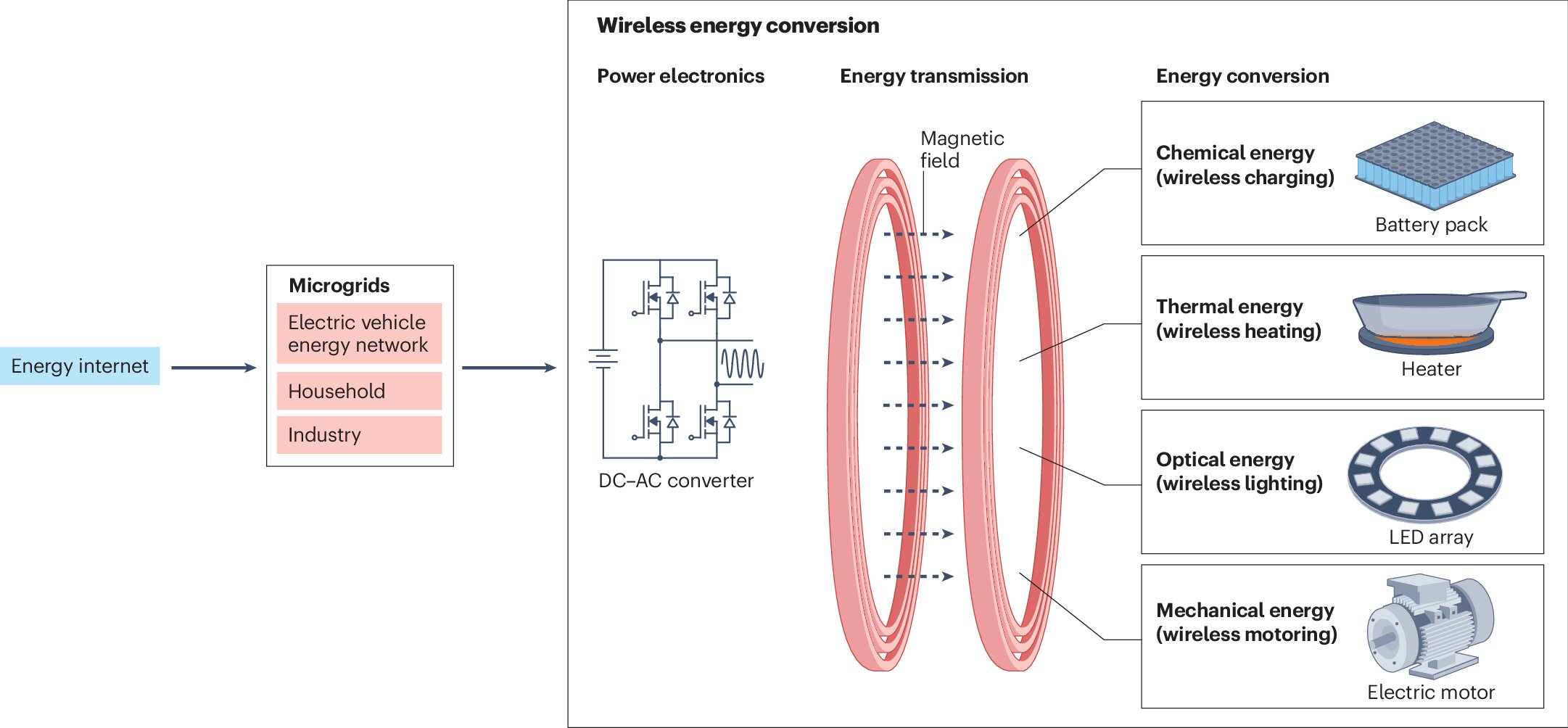
To drive this transformation, researchers at The Hong Kong Polytechnic University (PolyU) have conducted a study that sets out a technical roadmap for a "wireless energy internet," guiding the industry from "wireless power transfer" toward direct "wireless energy conversion."
The work is published in the journal Nature Reviews Electrical Engineering.
Conventional wireless power transfer systems typically receive electrical energy and store it in a battery or supercapacitor before producing light, heat or motion.
By contrast, direct wireless energy conversion transforms transmitted electric power directly into chemical, optical, thermal or mechanical energy. In other words, the energy sent from the transmitter can become light for illumination, heat for warming or force for driving motion—without first charging a battery—thereby eliminating intermediate storage and conversion stages, reducing energy losses, improving overall efficiency and simplifying receiver-side hardware.
The study also establishes a unified framework that integrates near-field and far-field transmission with different applications such as wireless charging, lighting, heating and motoring (mechanical energy), and summarizes the common design principles and future directions of the underlying technologies.
Source link





