Scientists have invented a trick to make batteries up to 80 percent more powerful without changing their basic chemistry.
The Barcelona Institute of Materials Science (ICMAB-CSIC), in collaboration with ICN2 and the National University of La Plata, has developed a new architecture for zinc-air batteries that boosts power output without changing the core chemistry.
Decades of battery design boiled down to one non-negotiable rule: keep the electrolyte electrically non-conductive. Free-floating electrons inside the liquid mean a short-circuited cell. Game over.
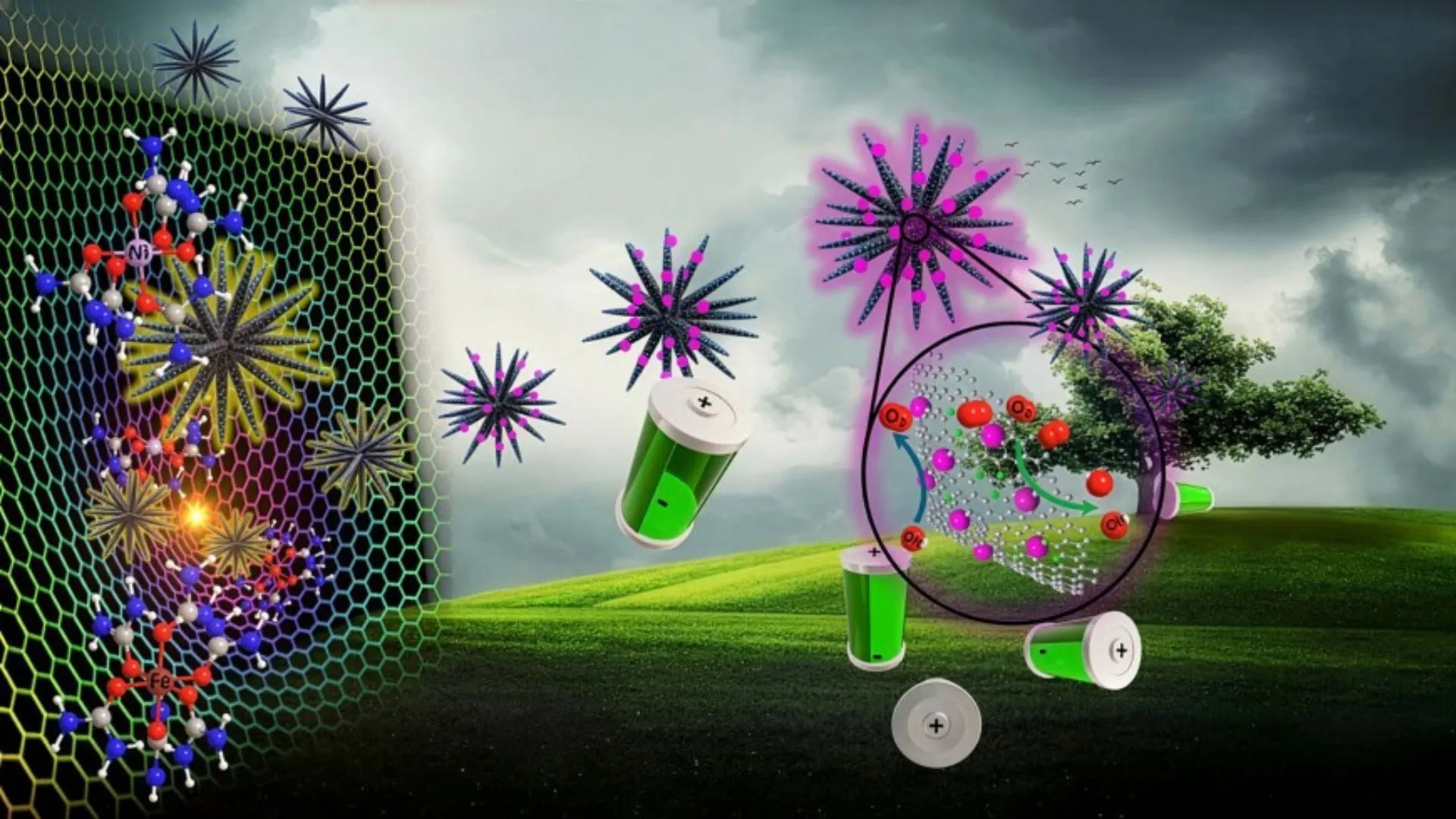
The team, led by Nieves Casañ-Pastor and Marc Mosqueda, showed that adding unconnected, conductive metal elements to the electrolyte can safely improve performance. In particular, it was found that introducing electrically conductive pieces into a membraneless zinc-air battery’s liquid middle creates wireless bipolar electrodes.
This design strategy opens new pathways for boost the power and charging capabilities of other battery technologies beyond zinc-air systems.
Batteries store energy using two distinct electrode materials separated by an electrolyte, a liquid that exclusively transports ions rather than electrons.
When the battery turns on, its internal electric field instantly polarizes the metal islands, charging one side positively and the opposite side negatively. This wireless reaction creates new pathways within the electrolyte that speed up charge movement and slash internal resistance. The result is a dramatically faster, more efficient flow of electrical energy without any physical wiring.
“Normally, if a material could transport electrons within the electrolyte, you would have a short circuit, and you would no longer have a battery,” said Casañ-Pastor.
Source link