

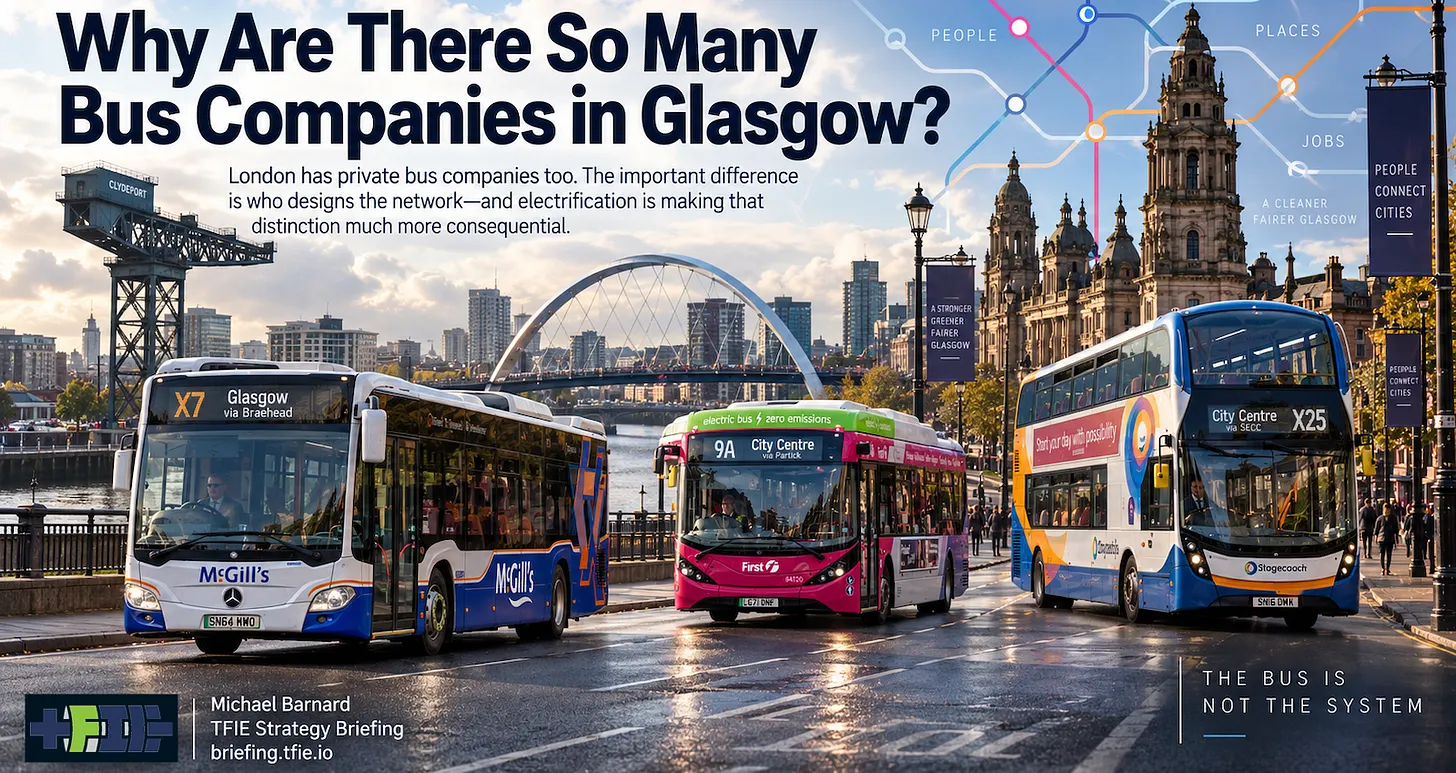
Walk around Glasgow as I did this summer and the bus companies are hard to miss. First Glasgow, McGill’s, Stagecoach and other operators have their own brands and vehicles, which can make the city look as though its public transport system has been divided among private companies. Being a bit of a transit and urban development obsessive, that led me to ask why, which turned into a significant research effort that led, inevitably, to implications for electrification.
London complicates the privatization interpretation immediately. It also has numerous private bus operators, but most passengers experience one Transport for London network: common fares, common information, coordinated routes and service standards, with private companies contracted to operate pieces of the system. The important difference is not whether private companies drive the buses. It is who decides what passenger network those buses are supposed to create.
That distinction is the starting point of Why Are There So Many Bus Companies in Glasgow?, the first Briefing in a five-part series drawn from the larger strategy report. The Glasgow article follows the institutional split created by Britain’s 1980s reforms; the report asks what forty years of that natural experiment can teach transit authorities now that electrification is turning governance boundaries into depot, grid and asset constraints.
Britain created that experiment through the Transport Act 1985. Outside London, most local bus services were deregulated from October 1986. Commercial operators gained broad freedom to register routes and timetables, while the former public operating businesses were separated from public authorities and later privatized.
Source link