Chemists have unlocked a secret that could transform zinc-air batteries into the ultimate rechargeable powerhouse.
Researchers at TU Darmstadt have developed a multifunctional composite material for enable rechargeable zinc-air batteries.
Making these batteries rechargeable has proved exceptionally difficult because controlling the complex chemical reactions within the cell presents a major technical barrier. To address this challenge, a research team led by Professor Jörg J. Schneider has shown that a novel composite material made of iron, nickel, and carbon can stabilize these internal processes.
Interestingly, the development enables rechargeable zinc-air batteries to achieve up to 300 hours of continuous operating time.
“The assembled secondary ZAB can be cycled for more than 300 h in a galvanostatic charge–discharge test,” the team stated.
Zinc-air batteries have remained low-profile, disposable powerhouses used mostly in hearing aids. These batteries are known to store up to five times more energy than lithium-ion batteries. But remained single-use because controlling their complex internal chemistry during charging proved nearly impossible.
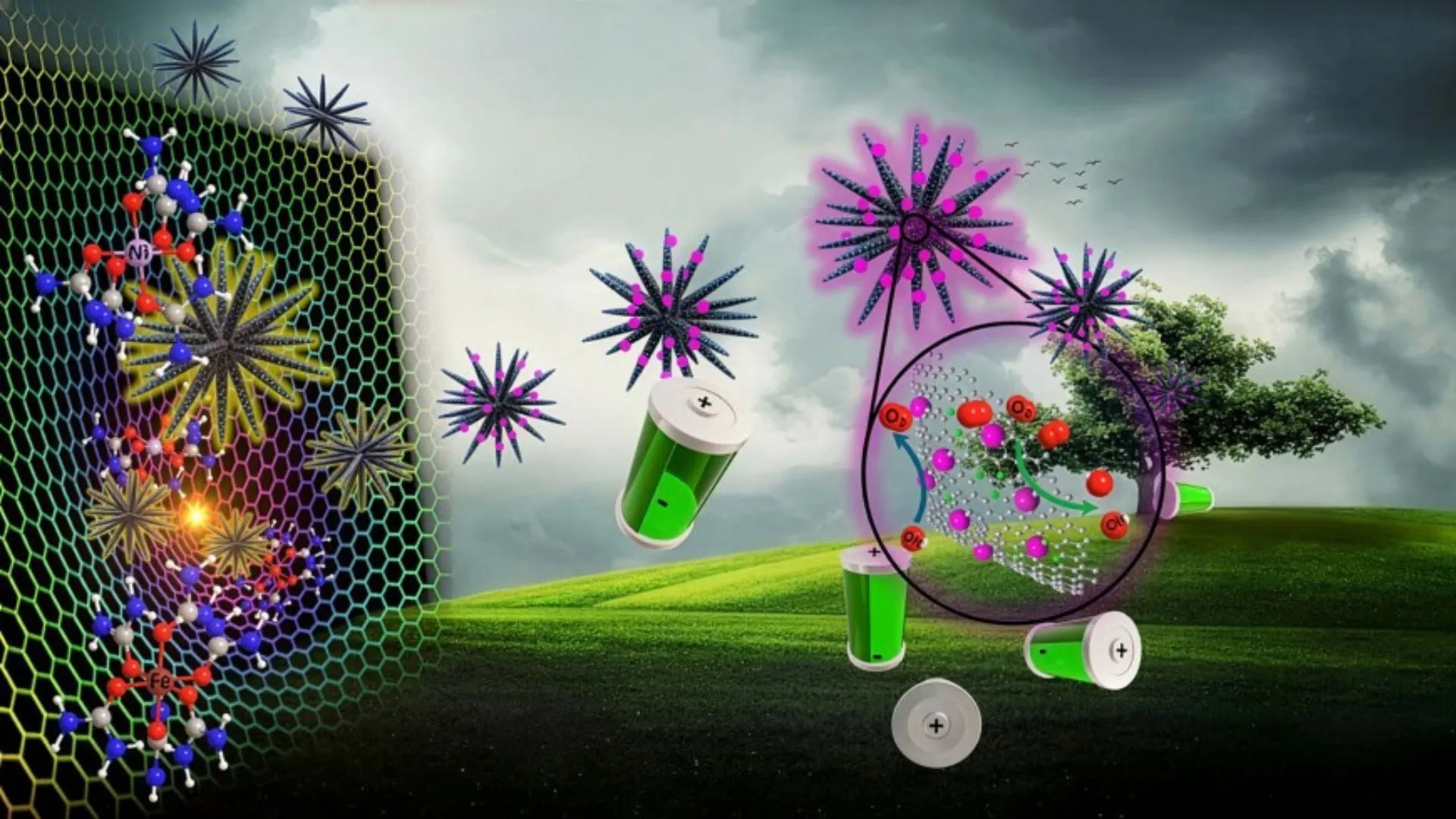
The team solved this by firmly attaching nano-sized spinel particles made of iron, nickel, and oxygen onto a carbon material enriched with nitrogen and phosphorus.
Spinels are already widely used across materials science and electrical engineering for their unique characteristics. The novel material leverages these specialized electrochemical properties to act as a long-lasting internal catalyst.
Earlier, nickel ferrites served as the foundational building block for the catalyst designed to drive the oxygen reactions inside the rechargeable zinc-air battery.
But these catalysts face challenges with low chemical activity and poor stability, which limits their use in rechargeable zinc-air batteries.
Source link