This article has been reviewed according to Science X's editorial process and policies. Editors have highlighted the following attributes while ensuring the content's credibility:
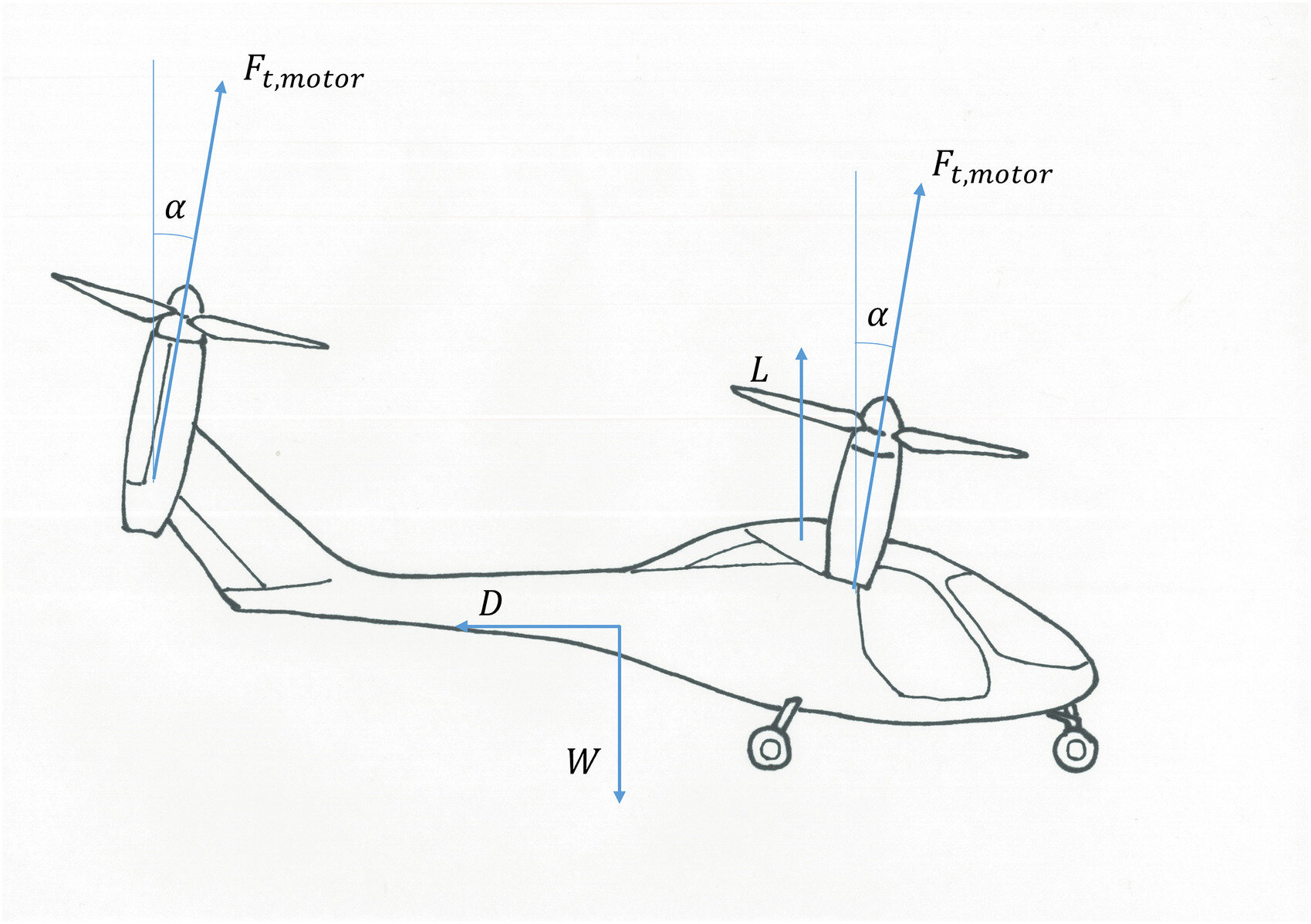
Electric vertical takeoff and landing (eVTOL) aircraft, often described as "flying cars," represent the next generation of transportation. By taking off vertically, these vehicles can potentially be used in cities without a runway for accessing airports, emergency medical transport or simply for tourism.
To generate the propulsion required to take off and land, eVTOL aircraft use electric batteries. However, using them efficiently may not just depend on improving the battery's charge; it could also involve carefully managing heat.
This is the finding of a new study led by Professor Daisuke Sasaki of the Graduate School of Engineering at Osaka Metropolitan University. Using a computational model developed in MATLAB/Simulink, the researchers simulated eVTOL aircraft under different seasonal atmospheric conditions. The study is published in the journal Applied Thermal Engineering.
Using a mission-level electro-thermal simulation model of a representative eVTOL aircraft, the researchers found that seasonal conditions can substantially affect energy consumption and achievable flight range.
In a simulation of summer conditions, energy consumption for managing temperatures reached about 16% of the battery's capacity.
Winter wasn't easy either, as they also found that the additional heating requirements effectively reduced the range that the eVTOL could travel by up to 22% compared with spring—the season with the longest effective range.
These differences were likely due to summer conditions requiring increased power for cabin cooling and heat rejection equipment, and winter requiring increased heating demand and propulsion power due to changes in air density.
Source link