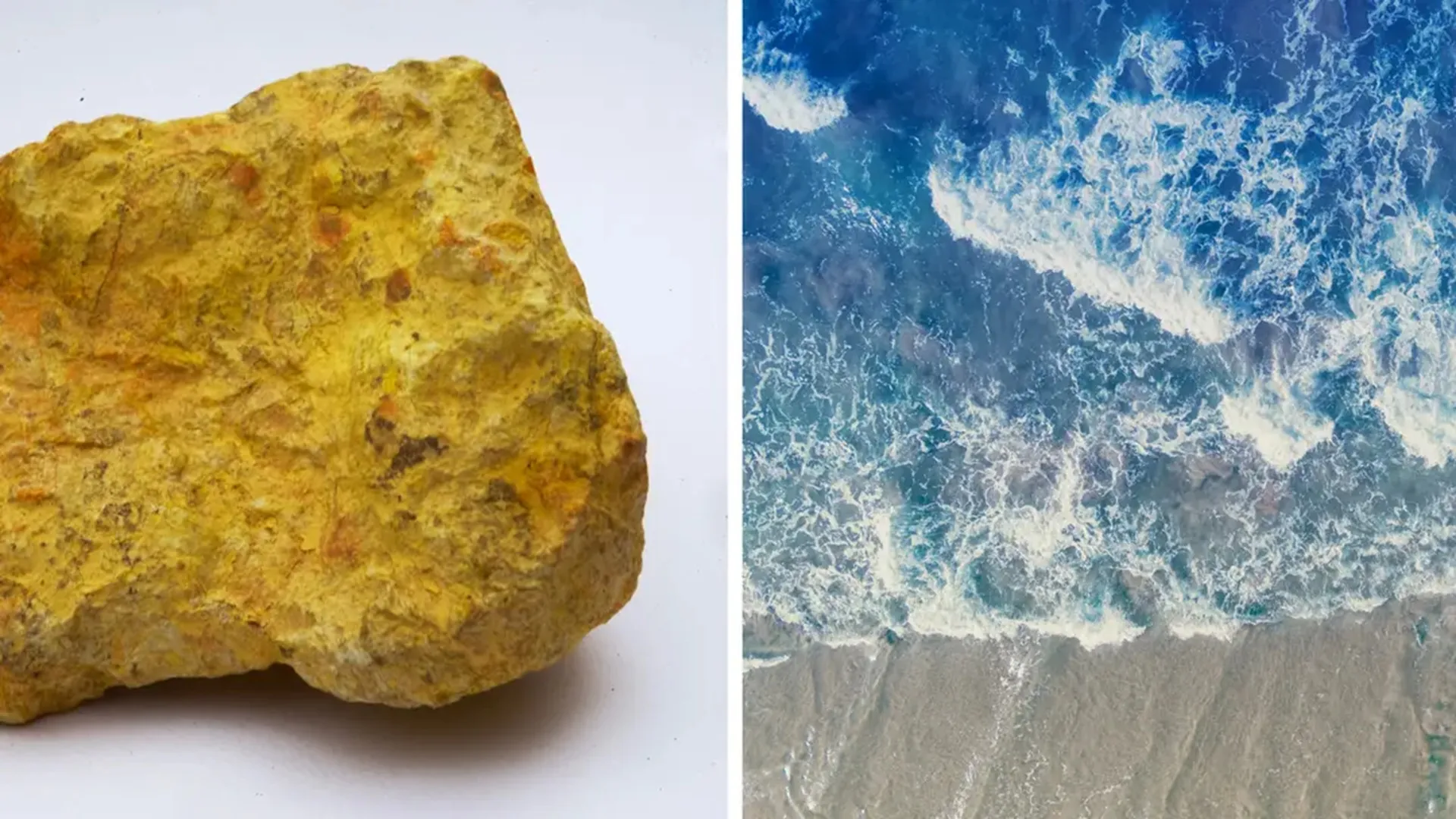
SuperCritical Materials has partnered with the University of Michigan to engineer and test offshore systems that could take its uranium-from-seawater technology toward industrial-scale deployment.
The company already holds an exclusive license to a patented adsorbent technology designed to capture dissolved uranium from seawater. The new research will focus on the mechanical systems needed to deploy, expose and repeatedly retrieve that material in marine environments.
The work will be led by Maha Haji, an assistant professor of mechanical engineering at the University of Michigan and director of its Symbiotic Engineering and Analysis Laboratory. Her research includes designing offshore systems for recovering critical resources from the ocean.
The partnership targets a major engineering challenge facing seawater uranium extraction. While the oceans contain an estimated 4.5 billion metric tons of dissolved uranium, a commercial system would need to handle large amounts of adsorbent efficiently through repeated offshore operating cycles.
University researchers will mechanically characterize SuperCritical’s uranium adsorbent and study how it responds to stresses during packing, deployment, ocean exposure and retrieval.
They will also evaluate different ways to pack the material into nearshore systems before designing and building multiple prototypes of equipment capable of deploying and retrieving it.
“The question is no longer simply whether uranium can be extracted from seawater. The question is whether the adsorbent can be deployed, exposed and retrieved efficiently and repeatedly at industrial scale,” said Alexander Canon Bryan, president and CEO of SuperCritical Materials.
Testing is expected to take place at the University of Michigan’s Aaron Friedman Marine Hydrodynamics Laboratory.
Source link