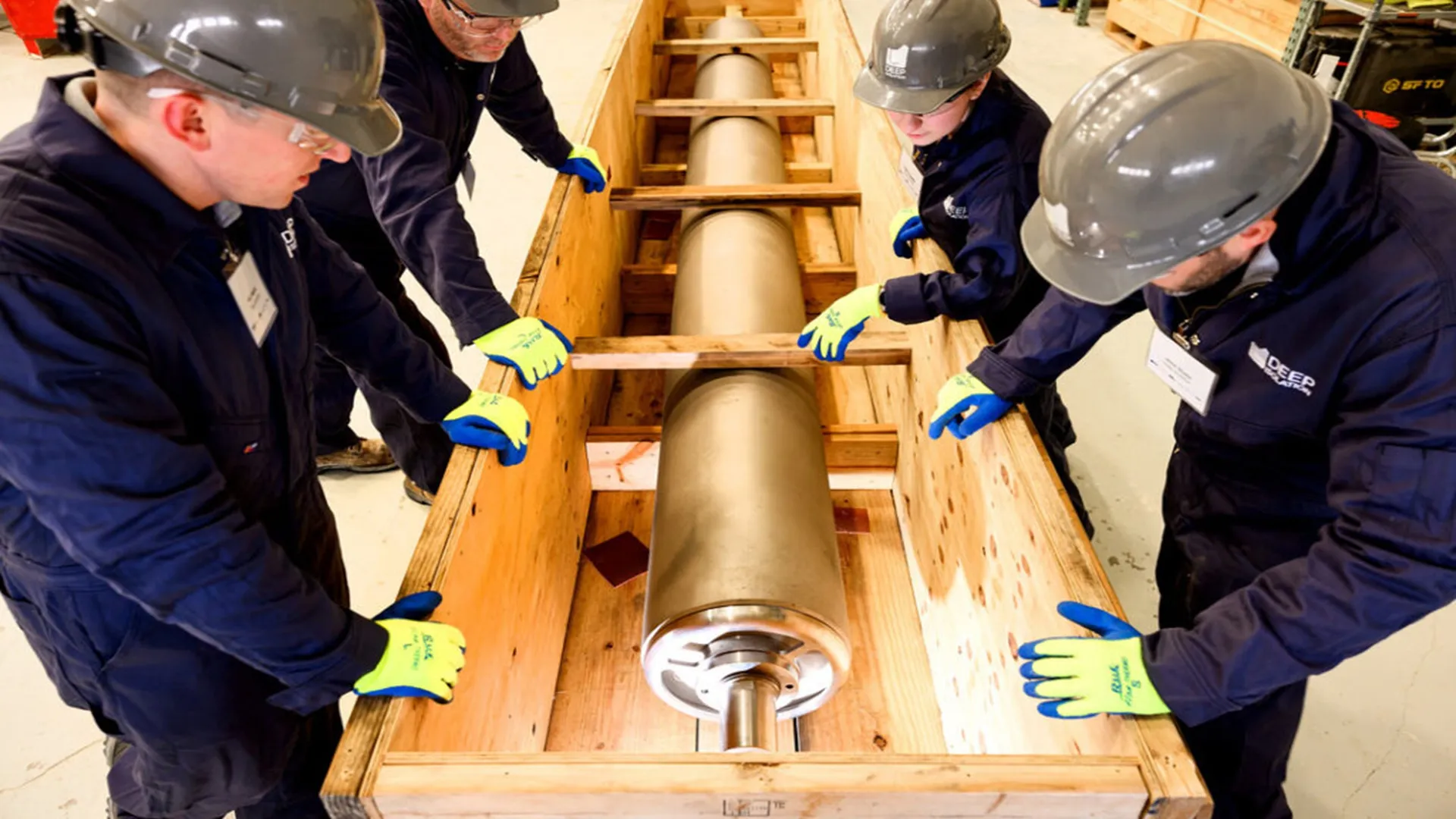
Deep boreholes could provide a safe and relatively low-cost way to permanently dispose of radioactive waste left after used nuclear fuel is recycled, according to results from a three-year US Department of Energy-funded project.
Deep Isolation evaluated multiple disposal scenarios involving waste from recycled nuclear fuel. Its analysis found that every scenario studied was projected to cost less than the program’s target of 0.1 cent per kilowatt-hour of electricity generated.
Long-term safety modeling also found that all scenarios under expected conditions met the study’s safety criteria. In most cases, projected radiation doses to the public were orders of magnitude below the 10 millirem-per-year regulatory benchmark used in the analysis.
The research was conducted under the Department of Energy’s ARPA-E CURIE program with Argonne National Laboratory, Oklo and Case Western Reserve University. Deep Isolation was responsible for studying how recycling waste could be packaged and permanently isolated underground.
The company’s approach uses deep boreholes drilled into geologically suitable rock formations. The project considered its Universal Canister System in both horizontal and vertical borehole configurations.
Researchers examined the full disposal process, including the characteristics of waste produced during fuel recycling, how that material could be packaged, repository design, long-term safety and disposal economics.
“This project shows the value of designing recycling and disposal systems together rather than treating waste management as a downstream consideration,” said Jesse Sloane, executive vice president of engineering at Deep Isolation.
The work is designed to complement emerging approaches that aim to extract additional value from used nuclear fuel rather than treating all of it as waste.
Source link