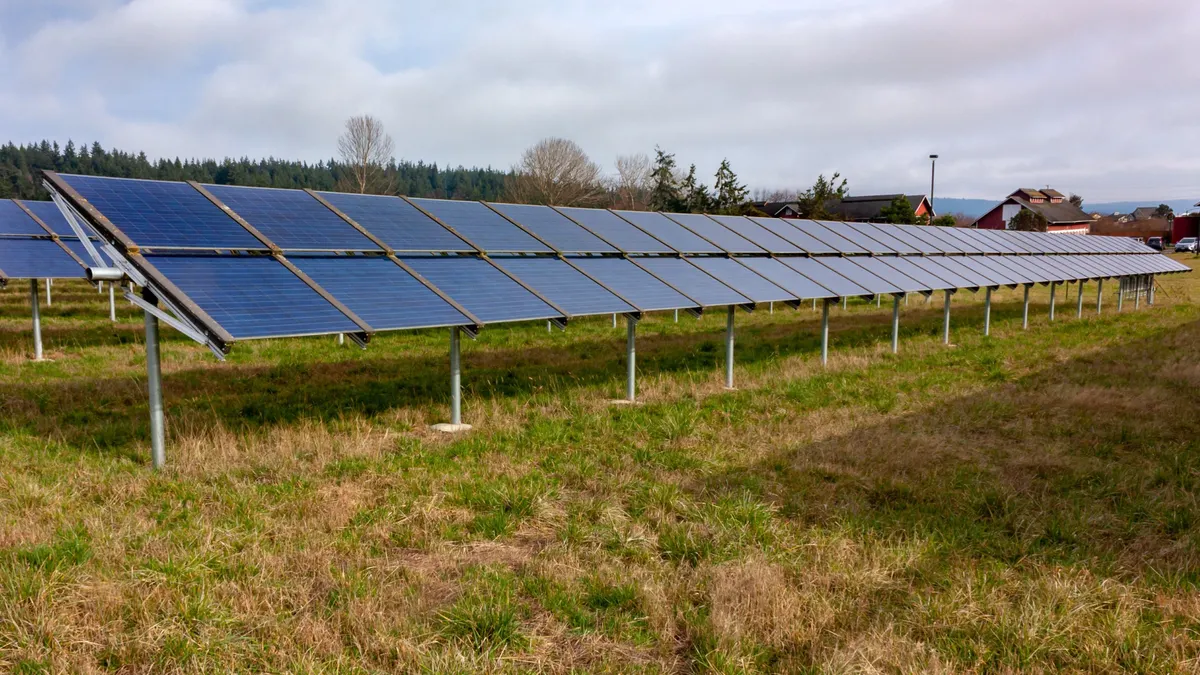
U.S. solar system prices increased across utility and commercial segments in the second quarter of 2026, driven by persistent structural materials tariffs and rising domestic transportation expenses, according to the latest pricing analysis from Wood Mackenzie and the Solar Energy Industries Association (SEIA).
Residential solar stood as the single exception to the upward pricing trend, with turnkey residential system costs dropping 1.4% year-over-year to average $3.36 per watt in Q2. Commercial solar system pricing experienced the steepest inflation, rising 5.6% year-over-year to $1.77 per watt. In the utility-scale segment, fixed-tilt system prices rose 0.9% year-over-year to $0.95 per watt, while single-axis tracking systems increased 2.0% over the same period to reach $1.06 per watt.
The top-line pricing trends reflect a widening divergence between equipment hardware costs and site-level installation logistics. While module hardware prices declined across the board, those savings were largely absorbed by rising structural, electrical, and transport expenditures.
In the distributed generation market, module prices dropped by an average of 16% year-over-year to hit $0.37 per watt in Q2. The sharp reduction followed the invalidation of International Emergency Economic Powers Act tariffs earlier in 2026, which eased trade pressure on imported solar components.
Conversely, utility-scale module price declines were far more muted. 33 per watt in Q2. -manufactured modules to secure federal domestic content adders and insulate project pipelines from trade enforcement risks.
Source link