When Congress revisits clean-energy tax policy, lawmakers should restore incentives for locally driven solar and storage projects, writes Edward Yim at Lawyers for Good Government.
Edward Yim is the director of clean energy at Lawyers for Good Government, and previously helped implement the IRA Home Energy Rebates at the U.S. Department of Energy. He previously served as director of state and utility policy at the American Council for an Energy Efficient Economy.
In this time of soaring energy demand and ever-rising utility bills, small clean energy projects are too often dismissed. Wall Street has been quick to turn to gas turbines that can produce hundreds of megawatts of power from one site at the expense of public health and the environment, or large-scale solar projects that produce low-cost clean energy, but with land use implications.
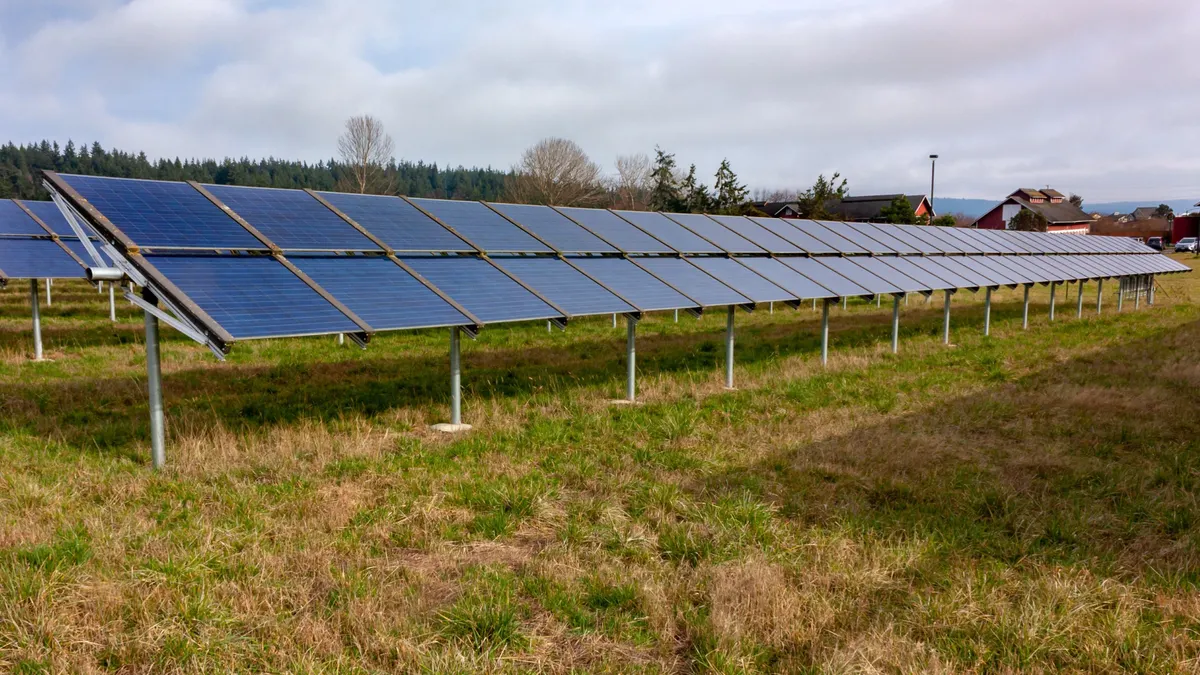
To the extent that just one of these “utility-scale” facilities can produce enough electricity to power a small city, turning to smaller projects to solve our energy crisis could seem ineffectual. On this point, looks are deceiving. Those small projects account for at least 20% of all solar installed in the United States.
Small, community-scale clean energy projects have a number of advantages that are overlooked, even by some clean energy advocates . These projects can immediately reduce electricity bills, provide backup power when paired with a battery energy storage system, and reduce dependence on coal and gas whose pollution causes heart and lung diseases and contributes to climate change. Importantly, these projects come with local support in many cases, and small-scale solar developers are rarely exposed to the kinds of permitting delays that a utility-scale solar project may face.
Source link