US nuclear waste technology company Deep Isolation has finalized a three-year cooperative agreement with the Department of Energy’s Advanced Research Projects Agency-Energy (ARPA-E), securing eligibility for up to $20 million in federal funding to advance its nuclear waste disposal technology toward commercial deployment.
The funding will support the development of the company’s Universal Canister System (UCS), a technology designed to package and dispose of spent nuclear fuel and other radioactive waste in deep geological boreholes. The project will focus on engineering, regulatory work and full-scale field demonstrations, including a non-radioactive pilot in Cameron, Texas.
The agreement follows Deep Isolation’s selection for ARPA-E’s SCALEUP Ready program in April 2026. The initiative is intended to help promising energy technologies move beyond prototype development and toward commercial-scale implementation.
Deep Isolation’s approach involves placing sealed nuclear waste canisters inside deep boreholes drilled into stable geological formations. The concept is intended to provide permanent isolation of radioactive material from the environment, using the depth and geological characteristics of the surrounding rock as an additional barrier.
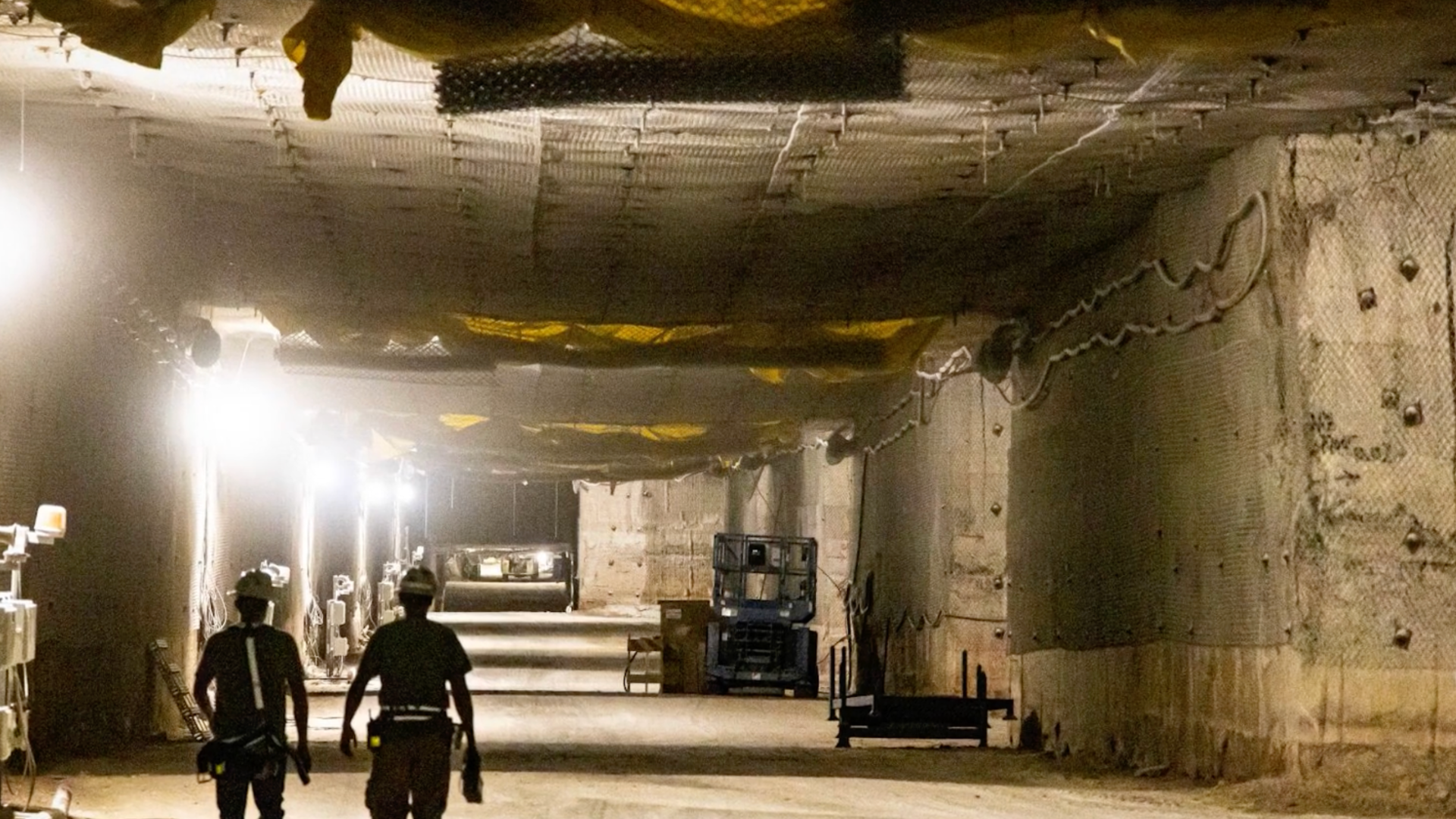
Unlike conventional mined geological repositories, which use underground tunnels and chambers, deep-borehole disposal relies on narrower, vertically or directionally drilled wells. The canisters are lowered into the borehole, where they would be isolated at depth and eventually sealed.
The UCS is designed to accommodate different types of nuclear waste, including spent fuel from conventional reactors and advanced reactor technologies. Its development is particularly relevant as governments and companies explore smaller modular reactors and microreactors, which will also require solutions for managing the radioactive material left after fuel use.
Source link