
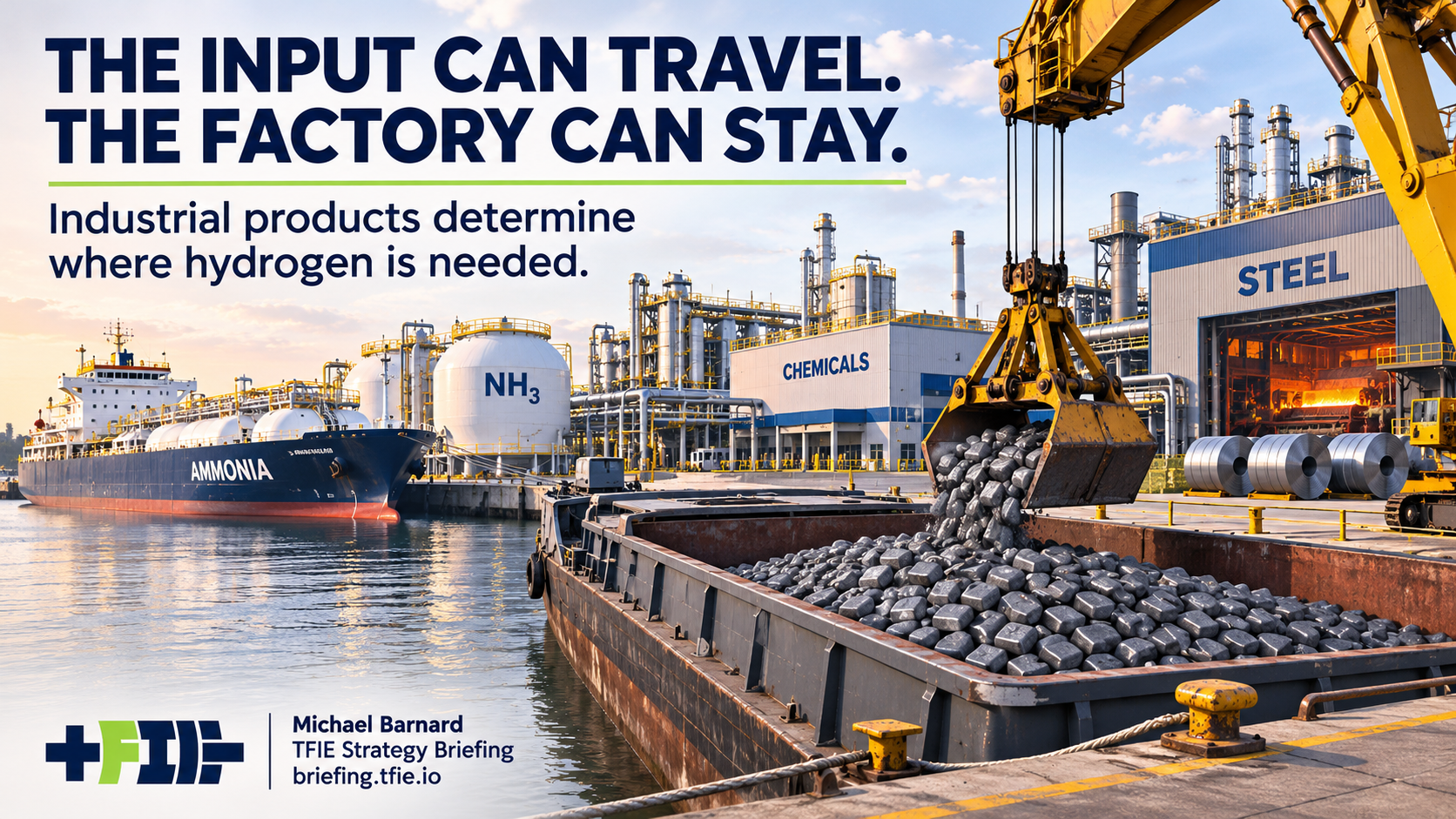
An industrial policy that starts with domestic hydrogen production targets can end up making European manufacturing more expensive. Chemical plants need ammonia. Steelmakers need suitable iron inputs. Neither necessarily needs to produce the hydrogen used to manufacture those materials within the European Union.
The difference is already visible in industrial trade. In September 2025, Trafigura loaded 23,500 tons of certified lower-carbon ammonia from CF Industries’ Donaldsonville plant in Louisiana for Envalior in Antwerp. Envalior intended to use the ammonia to produce caprolactam, an input for engineering materials. The American ammonia was manufactured from natural gas with carbon capture. It was a lower-carbon shipment, not an example of renewable hydrogen production.
The chemical division of labor matters. Producing ammonia requires hydrogen, but buying ammonia for chemical production does not require a separate supply of hydrogen. Its hydrogen is already incorporated into the ammonia molecule. The European plant buys the chemical it needs and continues its manufacturing operations. The upstream hydrogen plant is located where the ammonia is made.
Many proposed hydrogen import corridors take a longer route. Ammonia is manufactured abroad, shipped to Europe, then cracked back into hydrogen for domestic users. Cracking adds industrial equipment and energy consumption. A refinery buying hydrogen and a chemical plant buying ammonia have different requirements. Infrastructure serving one should not be assumed necessary for the other.
Primary iron offers another example. Hot-briquetted iron, or HBI, is a transportable form of direct-reduced iron. Voestalpine is constructing an HBI supply system in Linz to feed its planned electric arc furnace.
Source link