A research team from the University of New South Wales (UNSW) has investigated the impact of bushfires on PV power generation and long-term module reliability, finding that their effects extend well beyond fire-affected areas.
“Using 20 years of atmospheric and satellite data (2003–2024), we quantify the impact of bushfire smoke transport, elevated operating temperatures, and associated degradation, focusing on Australia’s major Black Summer and Black Saturday bushfires,” corresponding author Bram Hoex told pv magazine.
The Black Summer bushfires of 2019–2020 and the Black Saturday bushfires of 2009 were among Australia’s most devastating natural disasters. Black Summer burned more than 24 million hectares, destroyed thousands of homes, and killed or displaced billions of animals. The Black Saturday fires in Victoria claimed 173 lives and destroyed more than 2,000 homes. Both disasters caused widespread environmental damage and loss of life, highlighting the risks associated with extreme heat, drought, and climate change.
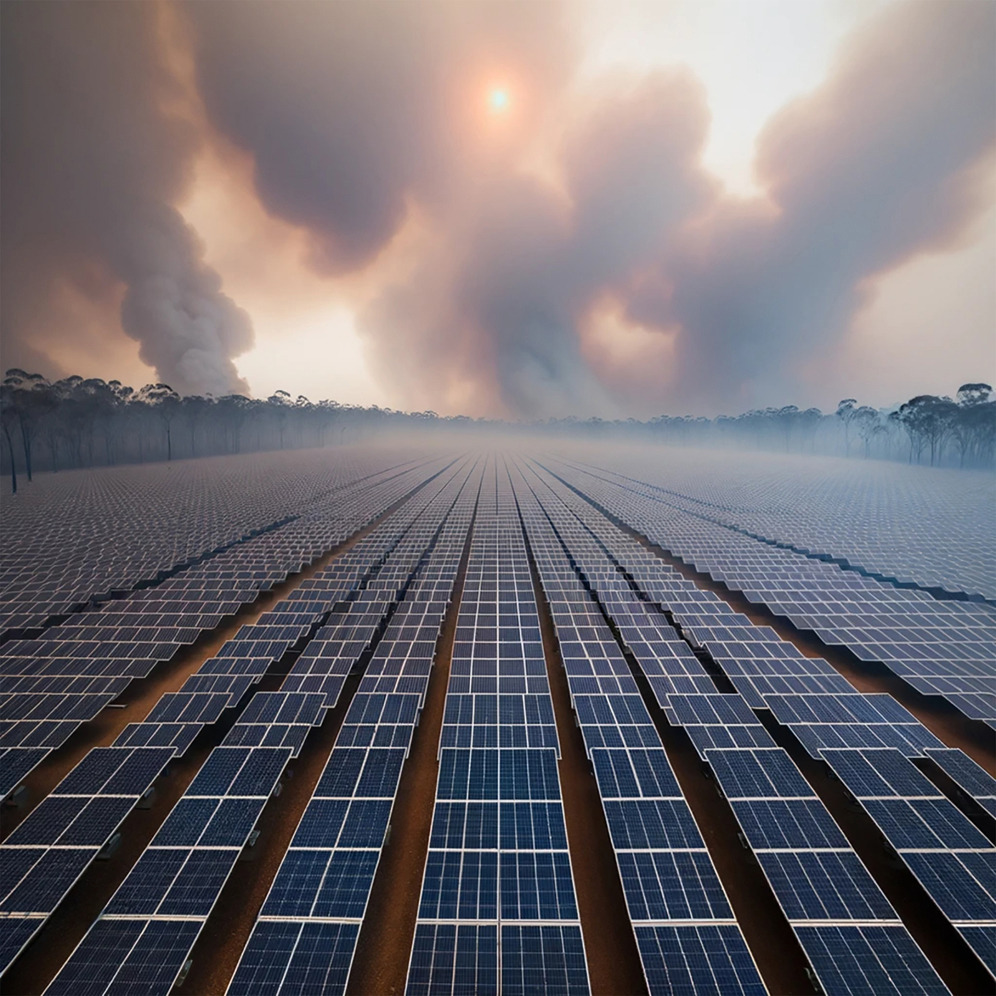
The researchers explained that bushfire smoke contains aerosols, including fine particulate matter (PM2.5), which reduce air quality and attenuate sunlight. These particles scatter and absorb solar radiation, significantly reducing PV electricity generation. Aerosol deposition on solar panels also causes soiling, reducing efficiency and potentially creating hotspots, while elevated temperatures during bushfires can accelerate module degradation and shorten their service life.
The scientists used the European Centre for Medium-Range Weather Forecasts’ ERA5 reanalysis dataset to obtain hourly meteorological data and the Copernicus Atmosphere Monitoring Service (CAMS) to assess smoke pollution using aerosol optical depth (AOD) data. They also used observations from the Moderate Resolution Imaging Spectroradiometer (MODIS) to identify active bushfire hotspots with a detection confidence greater than 75%.
Source link