In states with extra grid capacity in winter, heat pumps would help lower residential electricity rates by spreading out fixed costs, according to a new RMI study.
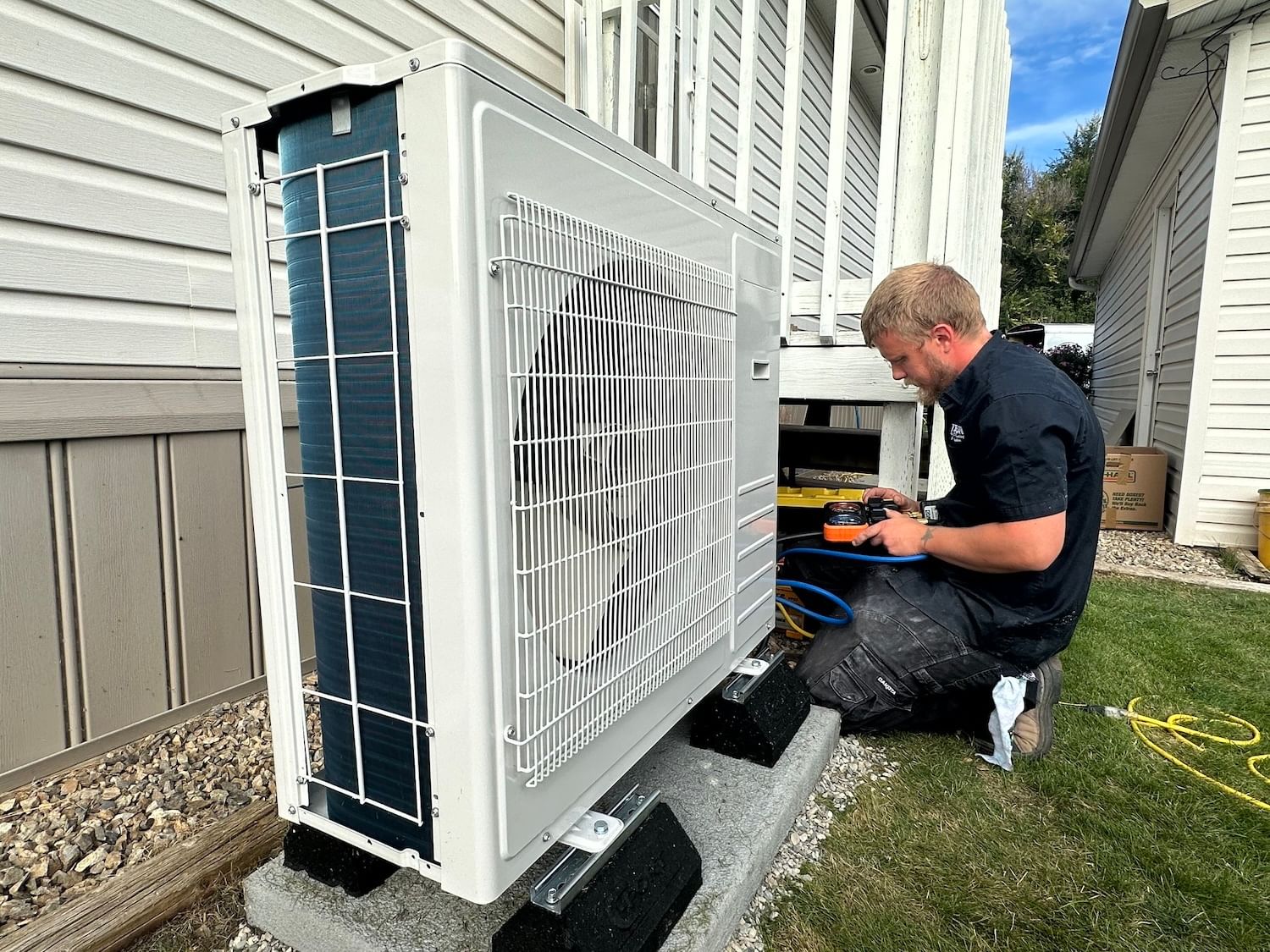
A technician installs a minisplit heat pump. (Vernon Air Conditioning, CC BY 4.0, via Flickr)
Heat pumps, superefficient sources of electric heating and cooling, are winners for the climate, air quality, and typically a household’s energy bills. But a common claim cautioning against their widespread adoption in the U.S. is that the electrical grid is too strained to handle all the extra demand they would bring.
Now, a new study from clean energy think tank RMI tackles that myth. In most of the country, use of the grid maxes out in summer — during the hottest afternoons when people turn on their power-hungry air conditioners at the same time. But in winter, roughly half of states have plenty of spare capacity for heat pumps to keep homes toasty, the study found. Plus, these heat pumps wouldn’t drive up peak energy use in summer, because they would largely be displacing less efficient air conditioners.
This means that a lot of new heat pumps could be added without triggering expensive grid buildouts. But that’s not all. The study also shows that in the 24 states, plus Washington, D.C., that RMI analyzed — the places with the most spare grid capacity — heat pump adoption by some could actually help keep electricity costs more affordable for all customers.
Here’s how: Electricity rates encompass the cost of the power itself and the larger, fixed costs for the stuff that makes up the grid — the poles, wires, power plants, transformers, and other equipment — as well as regulated profits for the utility.
Source link