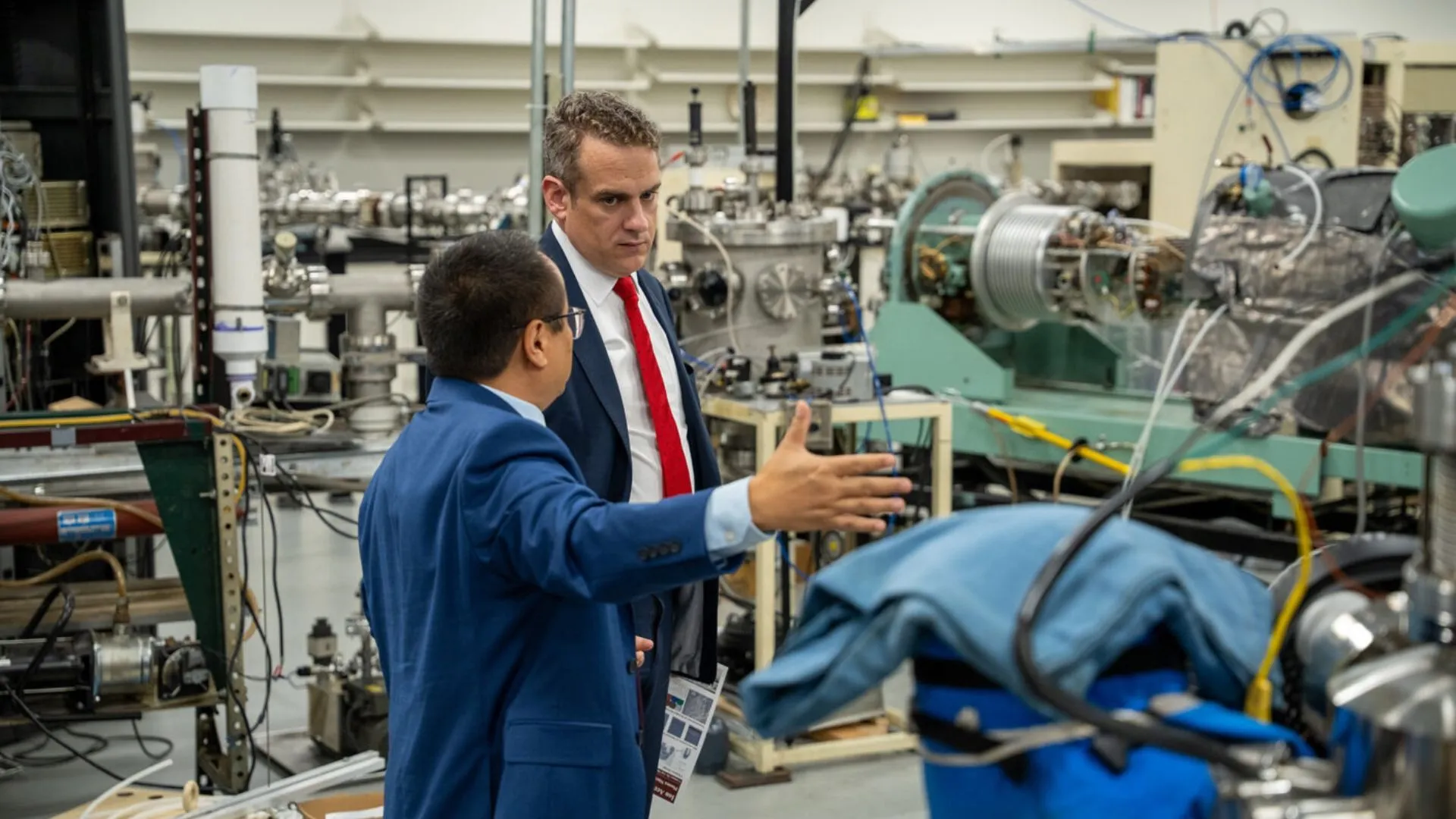
In our latest episode of Lexicon, we sat down with Manuel Hartong, CTO of Dynamic E-Flow, who breaks down why that gap exists and why it matters more than most people realise.
Electric motors are efficient, reliable, and already embedded across industries from automotive to aerospace. But as Manuel Hartong makes clear, there is still a fundamental constraint holding them back: heat.
Electric motors are efficient, but not perfectly so. The heat generated in the copper windings has to go somewhere. “Many materials that are electrically insulating are also thermally insulating,” Hartong told us.
In conventional designs, the heat must travel through multiple layers of insulation, structural materials, and air gaps before it reaches any cooling system. By the time it gets there, the damage is already done.
“To cool it, typically you have a water jacket around the motor. But between the wires and the cooling medium, you have many layers,” he explained.
This creates a fundamental limitation. Motors can deliver high peak power, but only for a short burst. “Typical car motors can run at peak power for 30 seconds, maybe a minute,” he said.
After that, output has to be reduced. For applications like electric aircraft, that limitation becomes critical. “If you imagine a plane taking off, it needs to go longer than that,” he added.
To help solve this, most cooling systems focus on removing heat from the motor as a whole. However, Hartong argues that this is fundamentally inefficient.
“Cooling the motor instead of the source is like trying to put out a fire by cooling the room,” he explained.
Source link